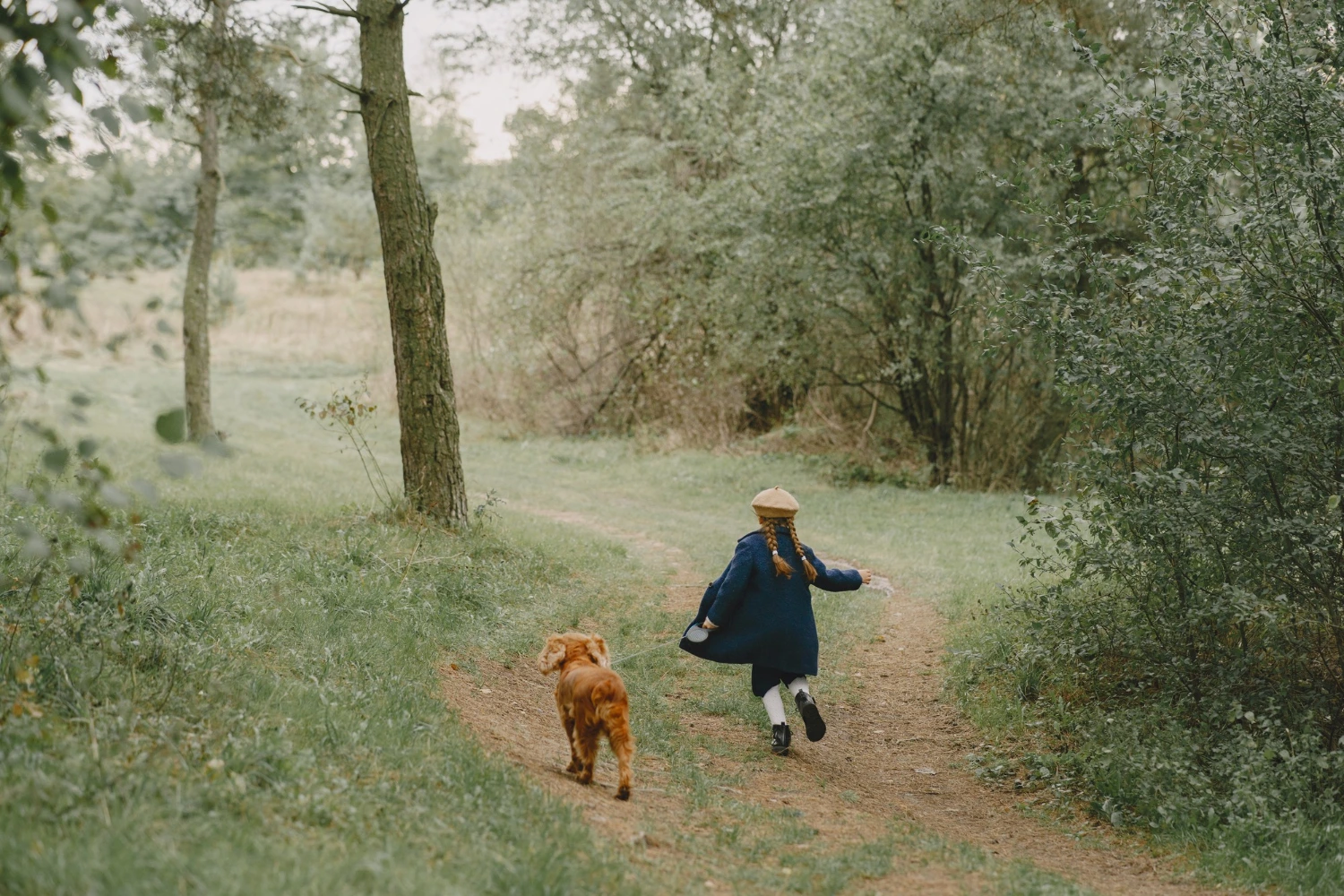
Kent Dog Walks: Why This Guide Exists
Kent has more variety packed into one county than most dog owners realise. Within an hour's drive you can go from chalk ridgeline with views across the Weald, to flat open marshland where the sky feels twice as big, to cliff-top coastal paths looking straight at France. The problem with most "best dog walks in Kent" lists is that they're written by someone who's never actually stood in a car park at Wye Downs wondering if there's phone signal, or tried to work out which section of Folkestone beach bans dogs in summer.
This guide is built around what local Kent dog owners actually need to know: where to park, where you'll lose mobile signal, where livestock grazing means leads are non-negotiable, and which beaches have seasonal dog restrictions. Every location named here is a real place we can point to on a map — not a generic list padded with stock photos.
What this guide covers: An area-by-area breakdown of the best dog walking in Kent — from the North Downs Way and the Elham Valley to Romney Marsh, the White Cliffs, and the coastal paths around Folkestone, Hythe and Dover. Each section includes practical detail that matters when you're actually there with a dog: parking, terrain, livestock, signal, and seasonal notes.
Important: Livestock law changed on 18 March 2026
The Dogs (Protection of Livestock) (Amendment) Act 2025 came into force on 18 March 2026. Fines for livestock worrying are now unlimited (previously capped at £1,000), and the definition of livestock worrying has been broadened to include chasing and being at large among livestock without control.1 Read our complete Kent dog safety guide for the full details of what changed.
Jump to an area
- The North Downs Way
- White Cliffs of Dover and Samphire Hoe
- Folkestone: Warren, Cliff Tops and Leas
- Hythe and the Royal Military Canal
- The Elham Valley
- Romney Marsh and Dungeness
- Woodland walks: King's Wood and Blean Woods
- Long-distance paths through Kent
- Dog-friendly beaches: seasonal restrictions
- The rules: Countryside Code, leads and livestock
- Safety: signal, ticks and seasonal hazards
The North Downs Way
The North Downs Way is a 153-mile National Trail running from Farnham in Surrey to Dover in Kent, following the chalk ridge of the North Downs.2 Dogs are welcome on the trail.3 The Kent section — roughly from Wye eastwards to Dover — passes through some of the finest chalk downland in southern England, with panoramic views across the Weald to the south and the Channel coast ahead.
You don't need to walk all 153 miles. The trail works brilliantly as a series of day-walk sections, and many of the Kent stretches are circular or can be combined with bus routes back to your starting point. The Kent Downs National Landscape website and Explore Kent both publish downloadable route guides for individual sections.4
Best sections for dog walking
- Wye to Hastingleigh — Passes through the Wye National Nature Reserve (134 hectares of chalk grassland managed by Natural England, home to 21 recorded species of orchid).5 The Devil's Kneading Trough viewpoint is a landmark — a steep dry valley cutting into the Downs. Note: grazing livestock are used to manage the grassland on Wye Downs, so leads are essential through the reserve.
- Folkestone to Dover (Two Harbours Walk) — A 9-mile (14.5 km) coastal section passing through East Cliff and Warren Country Park, with cliff-top views across the Channel.6 This is one of the most dramatic stretches of the entire National Trail.
- Charing to Wye — Rolling farmland, orchards and woodland through the heart of the Kent Downs. Less exposed than the ridge-top sections and good shade for summer walks.
Mobile Signal on the North Downs Way
Signal can drop out in the valleys between Wye and Hastingleigh, and in the wooded sections near Stowting. On the ridge itself, coverage is generally reasonable, but do not rely on it in the dips. If your dog is a bolter and you walk in these areas regularly, a GPS tracker is worth considering — it works independently of your phone signal.
Nearest Groomer After Your Walk
After a muddy North Downs walk, find a groomer in Folkestone or Hythe for a post-walk clean-up.
White Cliffs of Dover and Samphire Hoe
The White Cliffs (National Trust)
The White Cliffs of Dover are managed by the National Trust. Dogs are welcome in all outdoor spaces at the White Cliffs and at South Foreland Lighthouse.7 The main walking route runs along the cliff top from the National Trust visitor centre towards South Foreland Lighthouse and on towards St Margaret's Bay — roughly 3 miles each way.
This is one of the most iconic walks in England, and it's genuinely dog-friendly. The paths are well-maintained, the views are extraordinary on a clear day (you can see France, 21 miles across the Strait), and there's a National Trust café at the visitor centre with outdoor seating where dogs are welcome.
Practical notes for dog owners:
- Cliff edges: The chalk cliffs are actively eroding. Keep your dog close and under control — there are sheer drops with no barriers in places. The National Trust asks that dogs be kept under close control and in sight at all times.7
- Livestock: Grazing cattle and sheep are used on the cliff-top grassland for conservation management. Keep your dog on a lead when livestock are present.
- Parking: The National Trust car park (Upper Road, Dover CT16 1HJ) charges for non-members. It can fill up on sunny weekends — arrive before 10am in summer.
- Wind: The cliff tops are fully exposed. In strong wind, this walk is better saved for another day.
Samphire Hoe Country Park
Samphire Hoe sits at the foot of the White Cliffs, between Dover and Folkestone. It was created from 4.9 million cubic metres of chalk marl excavated during the construction of the Channel Tunnel and opened in 1997. It's now managed by the White Cliffs Countryside Partnership as a nature reserve.8
Dogs are allowed but must be kept on a lead to protect the wildlife. The walk is relatively flat — a circular route along the sea wall and through the nature reserve, suitable for all abilities. Access is via a narrow road with a locked gate (opening times vary seasonally — check before you go).
Mobile Signal at Samphire Hoe
Signal is unreliable at Samphire Hoe because it sits at the base of the cliffs. If you're walking here with a dog that's prone to running, consider a GPS tracker — several models store location data even when mobile signal is patchy.
Folkestone: Warren, Cliff Tops and Leas
Folkestone is the heart of this site's local area, and it has some of the best dog walking on the Kent coast.
East Cliff and Warren Country Park
The Warren stretches for roughly 5 miles of coastline between Folkestone and Dover.9 It is one of the most important sites in southern Britain for wildlife, geology and landscape. For dog owners, the Warren beach has no seasonal dog restrictions — dogs are welcome year-round.10
The walking here is varied: you can stick to the beach (a mix of sand and shingle), take the cliff-top paths above, or combine both for a longer circular route. The terrain on the cliff paths can be uneven and muddy after rain — good boots are advisable.
Note: Highland cattle are sometimes used for conservation grazing in the Warren. Keep your dog on a lead if you see them.
Lower Leas Coastal Park
Lower Leas Coastal Park runs along the coast below the Leas promenade. It has well-maintained paths, a free adventure playground, and connects to the Warren at its eastern end. Dogs are welcome throughout the park. It's a good option for shorter walks or if you're combining a dog walk with a family outing.
The Leas to Sandgate
The Leas promenade runs along the top of the cliffs from the harbour end of Folkestone westwards towards Sandgate. It's flat, paved and has views across the Channel. From the western end you can drop down to Sandgate beach and continue along to Hythe. This is an easy, accessible dog walk with no stiles or difficult terrain — suitable for older dogs or owners with limited mobility.
Nearest Groomer After Your Walk
Folkestone has the largest number of groomers in our directory. Browse Folkestone groomer listings to find one close to your walking route.
Hythe and the Royal Military Canal
The Royal Military Canal is a 28-mile waterway stretching from Seabrook (just outside Hythe) to Cliff End near Hastings. It was built between 1804 and 1809 as a defensive line against a potential Napoleonic invasion — a third line of defence behind the Martello towers and the Romney Marsh itself.11
For dog walking, the canal towpath is one of the best flat, easy walks in south Kent. The West Hythe to Hythe section is a popular choice at either 1.9 miles or 4 miles depending on how far you go.12 The path is surfaced, mostly flat, and runs alongside the canal with water on one side and hedgerows on the other. Good for dogs that need a calmer walk or for owners who want a pushchair-friendly route.
Dog owners should know:
- The canal water is not fast-flowing but dogs will try to get in. If your dog is a swimmer, be prepared for a wet car journey home.
- The Hythe end of the towpath passes through the town — useful for a coffee stop but keep your dog on a lead through the built-up section.
- Cyclists also use the towpath, so keep your dog to one side.
Livestock on the Canal Route
Grazing livestock are present in fields adjacent to the canal path, particularly between West Hythe and Lympne. Keep your dog on a lead in sections where you can see or hear livestock. Under the new livestock worrying law (in force since 18 March 2026), even chasing livestock from a distance can constitute an offence with unlimited fines.1 Read the full guide to dog safety in Kent for more detail.
Nearest Groomer After Your Walk
Hythe has several groomers within easy reach of the canal. Browse Hythe groomer listings.
The Elham Valley
The Elham Valley Way is a 22.5-mile long-distance path running from Hythe to Canterbury, passing through what many locals consider Kent's most beautiful hidden landscape.13 The route meanders through chalk downland, ancient woodland, orchards and a string of quiet villages — Barham, Elham, and Lyminge among them.
Most of the walk passes through the Kent Downs National Landscape (renamed from AONB on 22 November 2023).14 The valley is gentle and sheltered compared to the ridge-top walks, making it a good choice for dogs that overheat on exposed paths in summer.
You don't need to walk the full 22.5 miles in one go. The village of Elham itself is a popular starting point for shorter circular walks — the Explore Kent website publishes a route from the village that climbs through open fields with views across the valley before descending through chalk grassland back to the village.15
Practical notes
- Parking: Small car parks and roadside parking are available in Elham village and at Lyminge. These are not large — arrive early on weekends.
- Stiles: Some sections have stiles rather than gates. If your dog can't jump a stile, check the specific route before you go.
- Livestock: The valley is farmed. Sheep and cattle graze in fields the path crosses. Leads essential when livestock are present.
- Pubs: The King's Arms in Elham is dog-friendly and a good halfway stop if you're doing a longer section.
Mobile Signal in the Elham Valley
The valley itself has notoriously poor mobile signal — the chalk hills block reception in many spots. The villages (Elham, Barham, Lyminge) have reasonable coverage, but once you're between them on the footpaths, don't expect consistent signal. A GPS tracker that stores location history is particularly useful here.
Romney Marsh and Dungeness
Romney Marsh
Romney Marsh is unlike anywhere else in Kent — or England. It's flat, open, and has an atmosphere that's either bleakly beautiful or hauntingly atmospheric depending on the weather. The landscape is crisscrossed by drainage ditches (called "sewers" locally, though they carry water, not waste), and the big skies feel more like Norfolk than the Garden of England.
The Romney Marsh Countryside Partnership manages several nature reserves across the Marsh and publishes walking information.16 The Romney Warren Local Nature Reserve near New Romney has three waymarked trails starting from the visitor centre.17
Dog walking on the Marsh:
- Sheep. Romney Marsh is sheep country. The Romney breed itself takes its name from this landscape. Expect sheep in almost every field, year-round. Leads are essential whenever livestock are in sight.
- Drainage ditches: The ditches are often deeper than they look and can have steep banks. Dogs that chase moorhens or ducks into ditches can struggle to get out. Keep an eye on your dog near water channels.
- Wind: There is no shelter on the Marsh. On windy days, it is fully exposed. Good for drying a wet dog — less good for comfort.
- Terrain: Flat throughout. This is excellent for older dogs, dogs recovering from surgery, or owners who need step-free routes.
Dungeness
Dungeness, at the southern tip of Romney Marsh, is one of the largest expanses of shingle in Europe and is designated as both a National Nature Reserve and a Special Protection Area. The RSPB manages a large reserve here, but dogs are not permitted on the main Discovery/Main trail or the Hanson ARC trail (assistance dogs excepted). Dog walkers should use the bridleway and public footpaths and park at the ARC car park.18
Outside the RSPB reserve boundaries, Dungeness is generally good for dog walking — the shingle beach is vast and mostly empty. Just be aware that the shingle is hard going underfoot for both dogs and owners, and there is zero shade.
Mobile Signal on Romney Marsh
Romney Marsh has significant mobile signal dead spots, particularly around Lydd, Old Romney, and the lower Marsh between Brenzett and Brookland. The flat, open landscape means there are few masts. If your dog is likely to chase sheep or bolt across open ground, a GPS tracker is strongly recommended for this area.
Nearest Groomer After Your Walk
There are limited grooming options on the Marsh itself. Your nearest options are in Folkestone or Hythe, both within 20–30 minutes' drive from most Marsh locations.
Woodland Walks: King's Wood and Blean Woods
King's Wood, Challock
King's Wood near Challock is a 588-hectare forest managed by Forestry England, sitting in the heart of the Kent Downs National Landscape.19 It's a mix of conifer and broadleaf woodland — previously a royal hunting ground — with a marked 6 km trail and additional unmarked footpaths for longer explorations.
This is one of the best woodland dog walks in Kent. The tree cover provides shade in summer, the paths are generally well-drained (though muddy in winter), and it's quiet enough on weekdays that many owners walk off-lead. Spring visits are rewarded with bluebells.
Parking: Forestry England car park on Soleshill Road, Challock. Free to park. The car park has space for around 40 cars.
Blean Woods (RSPB)
Blean Woods near Canterbury is one of the largest areas of ancient woodland in southern England, covering over 500 hectares.20 It is managed by the RSPB and is nationally important for nightingales and for the rare heath fritillary butterfly — the Blean colonies are among the largest remaining in the UK.21
There are several waymarked trails: from a 1.25-mile dog walk (the White trail) to an 8-mile route (the Black trail).22 Dog walkers must follow the marked routes — this is to protect the sensitive habitats that make the reserve important.23
Best time to visit: April to July for woodland wildflowers and the chance to hear nightingales. The heath fritillary butterflies are active in June and July.
Long-Distance Paths Through Kent
Kent is crossed by several long-distance walking routes. You don't need to walk them end-to-end — each one has individual sections that work as standalone day walks with a dog.
| Path | Total Length | Key Kent Sections | Terrain |
|---|---|---|---|
| North Downs Way | 153 miles2 | Wye → Dover (chalk ridge) | Hilly, chalk and woodland |
| Saxon Shore Way | 160 miles24 | Gravesend → Rye (coastal) | Mixed, coastal and inland |
| Elham Valley Way | 22.5 miles13 | Hythe → Canterbury (valley) | Gentle, chalk downland |
| Royal Military Canal Path | 28 miles11 | Seabrook → Cliff End (canal) | Flat, surfaced towpath |
The Saxon Shore Way deserves particular mention for dog walkers. It follows the ancient coastline (the shoreline as it was in Roman times), which means around Romney Marsh the route runs significantly inland from the current coast.25 This makes for quieter, less crowded walking than the actual coastal path — useful if your dog is reactive or you prefer fewer encounters with other dogs.
Dog-Friendly Beaches: Seasonal Restrictions
Kent has excellent beach walking, but many beaches have seasonal dog bans between 1 May and 30 September. Getting caught can mean a £100 fixed penalty notice. The rules vary by district council, so check before you go.
Folkestone & Hythe District
Folkestone & Hythe District Council operates seasonal dog restrictions on nine stretches of coastline between 1 May and 30 September.10
Year-round dog-friendly (no seasonal ban):
- The Warren beach — dogs welcome all year10
- Sections of coastline between the restricted zones — check the council website for exact boundaries
Dog-banned 1 May – 30 September:
- Sunny Sands Beach, Folkestone
- Mermaid Beach, Folkestone
- Sections of Hythe Beach (Twiss Road to St Leonard's Road)
- Sections of Sandgate beach
- Dymchurch beaches
Always check the Folkestone & Hythe District Council website for the current year's exact restricted areas, as boundaries can change.
The Rules: Countryside Code, Leads and Livestock
These aren't optional guidelines — breaking them can result in fines, criminal charges, or your dog being seized.
The Countryside Code
The Countryside Code (published by Natural England) sets out clear rules for dog walking in the countryside:26
- On Open Access land and at the coast, you must put your dog on a lead around livestock.
- Between 1 March and 31 July, you must have your dog on a lead on Open Access land, even if there is no livestock on the land. This is to protect ground-nesting birds.
- It is good practice to keep dogs on a lead around livestock on all footpaths, not just Open Access land.
- If cattle or horses chase you and your dog, let the dog go — it can outrun them, but you can't.
The new livestock law (18 March 2026)
The Dogs (Protection of Livestock) (Amendment) Act 2025 strengthened the existing law significantly.1 The key changes that affect Kent dog walkers:
- Unlimited fines (previously capped at £1,000)
- Broader offence definition: a dog does not need to attack livestock — chasing, being at large among livestock, or causing animals to flee can all be prosecuted
- More animal types protected: the law now covers alpacas, llamas, and enclosed deer in addition to traditional farmed livestock
- Stronger police powers: police can seize dogs suspected of livestock worrying
This matters for Kent specifically because the county has extensive livestock farming — from the sheep on Romney Marsh to cattle on the North Downs chalk grassland. Our complete Kent dog safety guide covers this law in full detail.
Safety: Signal, Ticks and Seasonal Hazards
Mobile signal
Many of Kent's best dog walks are in areas with poor mobile signal. The main problem areas for dog walkers:
- Romney Marsh — patchy to absent around Lydd, Old Romney, and the lower Marsh
- Elham Valley — drops out between villages due to chalk hills blocking signal
- North Downs Way — reasonable on the ridge, unreliable in valleys
- Samphire Hoe — at the base of the cliffs, signal is unreliable
- Deep woodland (King's Wood, Blean) — variable under heavy tree cover
If your dog is a flight risk and you walk in these areas, a GPS tracker is a sensible investment. Several models (Tractive, PitPat, Pawfit) offer live tracking that works even when mobile signal is patchy.
Ticks
Ticks are present across Kent's woodland, heathland, grassland and rural pasture, particularly between March and October. Check your dog after every walk, paying attention to ears, armpits, groin and around the collar. Use veterinary-approved tick preventatives. For more detail on tick species found in Kent (including Haemaphysalis punctata on the Isle of Sheppey) and Lyme disease risk, see the Kent dog safety guide.
Adders
The adder (Vipera berus) is the UK's only venomous snake and is found in Kent's heathland, woodland edges and grassland. Most bites to dogs occur between April and July, particularly in the afternoon when adders bask in warm spots. If your dog is bitten, keep them calm and get to a vet immediately — adder bites are a veterinary emergency. Most dogs recover with prompt treatment.
Summer heat
On hot days (above 20°C), walk early in the morning or in the evening. Avoid exposed routes like the North Downs ridge or Romney Marsh in the midday sun — there is no shade. Woodland walks (King's Wood, Blean Woods) are cooler alternatives on hot days. Flat-faced breeds (Bulldogs, Pugs, French Bulldogs) are at especially high risk of heatstroke. Always carry water for your dog.
Where to Go Next
This guide will grow as we publish detailed guides for individual areas. Each supporting guide covers specific routes with maps, distances, car park locations and seasonal notes:
Kent Dog Walk Guides
- Best Dog Walks on the Kent Downs Way — Wye, Etchinghill, Folkestone to Dover and more
- Dog Walking on Romney Marsh — Romney Warren, Royal Military Canal, Dymchurch coast and Dungeness
- Best Dog Walks Near Folkestone — Cliff tops, downs and more
- Best Dog Walks Near Hythe — Canal, coast and countryside
- Best Dog Walks Near Dover — White Cliffs, Samphire Hoe and more
Related guides from other silos
Walking and dog safety go hand in hand. If your dog goes missing on a walk, or you're worried about rural signal coverage, these guides cover the practicalities:
Sources and References
Legislation and Countryside Code
- Dogs (Protection of Livestock) (Amendment) Act 2025 — In force 18 March 2026. Unlimited fines, broader livestock worrying definition, stronger police powers.
National Trails and Long-Distance Paths
- North Downs Way — 153-mile National Trail from Farnham to Dover.
- North Downs Way — dogs welcome — Confirmed dog-friendly on the official trail guide.
- Kent Downs National Landscape and Explore Kent — Downloadable route guides for Kent walking trails.
- Wye National Nature Reserve — 134 hectares of chalk grassland managed by Natural England, 21 recorded orchid species.
- Folkestone to Dover walk (Two Harbours Walk) — 9-mile (14.5 km) coastal route via East Cliff and Warren Country Park.
Specific Locations
- National Trust — White Cliffs of Dover dog policy — Dogs welcome in all outdoor spaces.
- Samphire Hoe Country Park — Created from Channel Tunnel spoil, managed by White Cliffs Countryside Partnership. Dogs on lead.
- East Cliff and Warren Country Park — Approximately 5 miles of coastline between Folkestone and Dover.
- Folkestone & Hythe District Council — Dogs on beaches — Seasonal restrictions 1 May–30 September. No restrictions on The Warren beach.
- Royal Military Canal — 28 miles from Seabrook to Cliff End, built 1804–1809.
- Royal Military Canal — West Hythe to Hythe — 1.9 mile or 4 mile walk on mainly flat surfaced paths.
- Elham Valley Way — 22.5-mile long-distance path from Hythe to Canterbury.
- Kent Downs — renamed to National Landscape — All AONBs in England and Wales renamed National Landscapes on 22 November 2023.
- Elham Walk — Circular village walk through chalk grassland and open fields.
- Romney Marsh Countryside Partnership — Non-profit managing nature reserves across south Kent.
- Romney Warren Country Park — Three waymarked trails (dragonfly, rabbit and sheep) from the visitor centre.
- RSPB Dungeness — dog access restrictions — Dogs not permitted on Discovery/Main trail or Hanson ARC trail. Dog walkers should use bridleway and public footpaths.
Woodland Walks
- King's Wood, Challock — 588 hectares of mixed woodland managed by Forestry England, within the Kent Downs National Landscape.
- Blean Woods (RSPB) — Over 500 hectares of ancient woodland near Canterbury.
- Heath fritillary butterfly colonies at Blean — Among the largest remaining in the UK; the species was close to extinction in the late 1980s.
- Blean Woods trail lengths — White trail 1.25 miles (dog walk), Red trail 2.6 miles, Black trail 8 miles.
- Blean Woods — dog walkers must follow marked routes — To protect sensitive habitats.
Saxon Shore Way and Other Sources
- Saxon Shore Way — 160-mile route from Gravesend to Hastings.
- Saxon Shore Way — inland routing around Romney Marsh — The path follows the Roman-era coastline, running significantly inland from the current coast around the Marsh.
- The Countryside Code — dog walking rules — Dogs on lead around livestock on Open Access land; dogs on lead 1 March–31 July on Open Access land regardless of livestock.
Disclaimer: All facts, distances, access rules, and contact details are accurate as cited from the sources above. Access rules, seasonal restrictions, and opening times can change — always verify current details via the official links provided before visiting. This guide provides information for Kent dog owners and does not constitute legal advice.
Move from research into real local options
Use the directory to compare live grooming listings, or check the Kent price guide first if you want a quick cost sense-check before contacting a business.