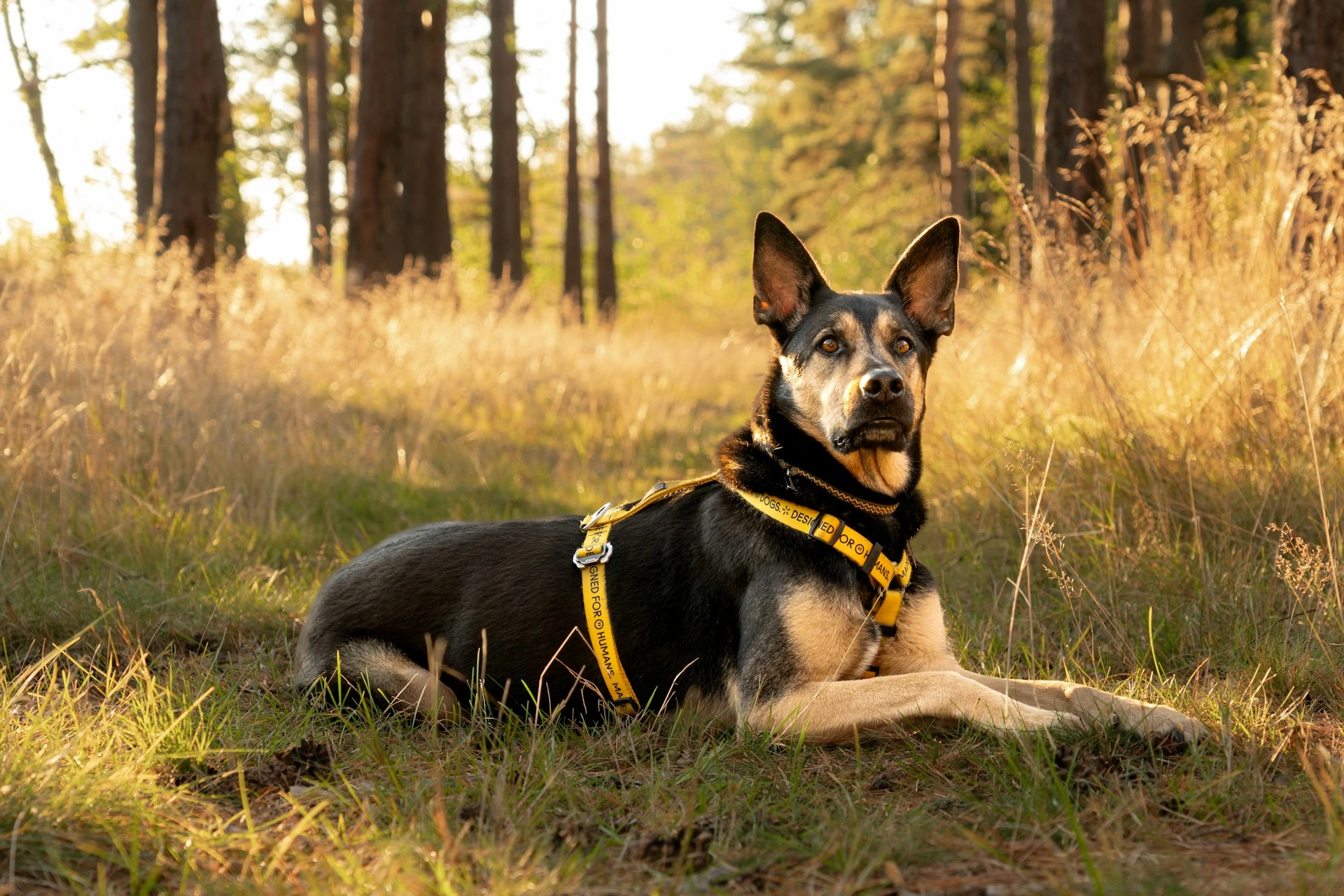
Dog Safety in Kent: The Complete Guide for Local Dog Owners
What this guide covers: Everything a Kent dog owner needs to know to keep their dog safe — from what to do the moment your dog goes missing, to the new livestock law that came into force on 18 March 2026, to the tick and adder risks specific to Kent's landscape. This is not a generic national guide with "Kent" dropped in — it names the districts, the terrain, the contacts, and the local hazards that actually apply to where you walk.
This page is intentionally local
The contacts, laws, and risk areas below are specific to Kent. Where a fact applies nationally (such as the Dangerous Dogs Act or microchipping law), it is stated as UK-wide. Where a detail is Kent-specific — such as the tick species found on the Isle of Sheppey or the District Council you need to call — it is sourced from Kent or official UK government pages and referenced at the bottom of this guide.
Jump to a section
- What to do if your dog goes missing in Kent
- Dog theft in Kent — how bad is it and how to reduce your risk
- Dogs and livestock — the new law from March 2026
- ID tags and microchipping — what the law requires
- Ticks and Lyme disease risk in Kent
- Adder bites — where and when to be careful
- Heatstroke warning signs every Kent walker should know
- Dangerous Dogs Act and the XL Bully ban
- Key Kent contacts at a glance
What to Do If Your Dog Goes Missing in Kent
The first hour matters more than anything else. If your dog has disappeared — whether on a walk along the North Downs, on Romney Marsh, or from your garden — start the calls immediately and work outward from where they were last seen.
If your dog is missing right now
Go straight to our step-by-step guide: What to Do If Your Dog Goes Missing in Kent. It covers the first 15 minutes, which district council to call, when to contact Kent Police, and how to alert your microchip database — all specific to Kent.
The short version
- Call your district council's dog warden service. There is no single Kent dog warden — each of the 12 Kent districts and Medway runs its own. Call the one for the area where your dog disappeared. Our full list of Kent dog warden contact numbers has every district with phone numbers, out-of-hours lines, and official council links.
- If the dog went missing near a district boundary, call both councils. Dogs do not stay inside neat administrative lines.
- Call Kent Police on 101 if theft or danger is involved. Call 999 if there is an immediate risk to life.
- Mark your dog as lost on your microchip database. The warden, vet, or rescue will scan the chip — if your contact details are out of date, the scan is a dead end.
- Register on DogLost.co.uk — a free volunteer-run UK database of missing and found dogs. Several Kent councils reference DogLost directly on their lost dog pages.1
Under the Environmental Protection Act 1990, councils must hold stray dogs for at least seven days before they can rehome or transfer them.2 After that, the dog may be rehomed, transferred to a rescue, or in extreme cases euthanised. Do not assume the council will hold your dog indefinitely — act fast.
Dog Theft in Kent: How Bad Is It?
Kent is one of the worst-affected areas in the country for dog theft. According to Direct Line Pet Insurance's annual report, Kent Police recorded 152 reported dog thefts in 2024, making Kent the UK's dog theft hotspot outside London. Of those 152 dogs, only 20 (13%) were recovered.3
In 2023, Kent Police recorded 138 stolen dogs — the second-highest force area in the UK after the Metropolitan Police (359). A BBC South East investigation found 149 dog theft reports were made to Kent Police in 2023/24, with XL Bullies, Labradors, and Miniature Poodles as the three most commonly stolen breeds.4
Nationally, between 2014 and 2024, 23,430 dogs were reported stolen across the UK, with only around 21% successfully returned to their owners.5
How to reduce the risk
- Never leave your dog tied up outside a shop. This is the single most common theft scenario.
- Vary your walking route and times. Thieves who target specific breeds will watch routines first.
- Check your garden security. A significant number of thefts happen from gardens — insecure fencing, open gates, or dogs left in front gardens unsupervised.
- Keep your microchip details up to date. A stolen dog that is scanned at a vet will only be traced if the database record has your current phone number and address.
- Be cautious about oversharing on social media. Avoid posting photos that show your dog's exact walking location or your home address tag.
- Consider a GPS tracker. A tracker will not prevent theft, but it massively improves the chance of locating your dog quickly.
If your dog is stolen, report it to Kent Police on 101 immediately — report it as stolen, not missing. Get a crime reference number. Then follow the steps in our missing dog guide, which covers contacting your district council, alerting DogLost, and notifying your microchip database in parallel.
Dogs and Livestock: The New Law from March 2026
The Dogs (Protection of Livestock) (Amendment) Act 2025 came into force on 18 March 2026.6 This is the biggest change to livestock-worrying law in over 70 years, and it directly affects every dog owner who walks in the Kent countryside.
What changed
- Unlimited fines. The previous maximum fine was £1,000. Courts can now impose unlimited financial penalties to reflect the severity of the incident.7
- Broader definition of "livestock worrying." The Act expands what counts as an offence. A dog does not need to physically attack livestock — chasing, being at large among livestock without control, or causing animals to flee can all constitute an offence.6
- More types of animals are protected. The previous law only covered sheep, cattle, goats, pigs, horses, and poultry. The new Act extends protection to camelids (alpacas and llamas), enclosed deer, and other farmed animals.7
- Stronger police powers. Police can now enter premises, seize and detain a dog suspected of livestock worrying, and gather evidence more broadly than before.7
- Dogs can be seized. If your dog attacks or worries livestock, it may be detained by police and potentially not returned.8
Why this matters in Kent
Kent is an agricultural county. The North Downs, the Elham Valley, Romney Marsh, and the countryside around Ashford, Canterbury, and Dover all have active livestock — sheep and cattle in particular. Many of the most popular dog walking routes cross grazing land. If you walk the Kent Downs Way, the Saxon Shore Way, or any of the footpaths across Romney Marsh, you will encounter livestock at some point during the year.
The Countryside Code rules for dogs
The UK Government's Countryside Code sets clear expectations for dog owners:9
- On Open Access land and at the coast, you must put your dog on a lead around livestock.
- Between 1 March and 31 July, you must have your dog on a lead on Open Access land, even if there is no livestock on the land. This covers nesting bird season.
- On public rights of way through agricultural land, keep dogs under close control — on a lead is always safest near livestock.
- If you feel threatened by cattle, let your dog off the lead. The Countryside Code specifically states: do not risk getting hurt trying to protect your dog. Release the dog so both of you can reach safety.9
ID Tags and Microchipping: What the Law Requires
Dog ID tags (collar tags)
Under the Control of Dogs Order 1992, every dog in a public place must wear a collar with the owner's name and address (including postcode) inscribed on the collar or on a plate or badge attached to it.10 This applies whether or not the dog is microchipped.
A phone number is not legally required on the tag, but it is strongly recommended — if someone finds your dog, a phone number gets you a call immediately rather than a letter in the post.
What must be on your dog's tag
- Your surname (or initial and surname)
- Your address including postcode
- Phone number (recommended but not legally required)
The fine for not having a tag can be up to £2,000. It is one of the simplest legal requirements to comply with, and one of the most commonly overlooked.
Microchipping
Microchipping has been compulsory for all dogs in England, Scotland, and Wales since 6 April 2016. All dogs must be microchipped and registered on a Defra-approved database by eight weeks of age.11
A microchip identifies your dog — it does not track them. When a warden, vet, or rescue scans the chip, it returns a registration number linked to your contact details on the database. If those details are wrong — old phone number, previous address — the scan leads nowhere.
Check your microchip record today. Log in to your database (Petlog, MicrochipCentral, Identibase, or whichever provider you registered with) and confirm your phone number and address are current. It takes two minutes and could be the difference between getting your dog back and not.
Ticks and Lyme Disease Risk in Kent
Ticks are present across Kent's woodland, heathland, grassland, and rural pasture. The main species in the UK is the sheep tick (Ixodes ricinus), which can carry the bacteria that causes Lyme disease (Borrelia burgdorferi).12
Kent also has a specific note in the tick research: the Red Sheep Tick (Haemaphysalis punctata) has been recorded on the South Downs, the Isle of Sheppey in Kent, and the Dengie Peninsula in Essex. This species is less common but is worth being aware of if you walk in those areas.13
Where ticks are most common in Kent
- Woodland and ancient woodland on the Kent Downs — including areas around Elham, Stelling Minnis, and King's Wood
- Heathland and rough grassland on Romney Marsh edges
- Overgrown footpaths through pasture and bracken
- Deer parks and areas with high deer populations (deer are a major tick host)
- The Isle of Sheppey specifically for the Red Sheep Tick
Tick prevention and removal
- Use a veterinary-approved tick preventative — spot-on treatments, tick collars, or oral preventatives. Ask your vet which product suits your dog.
- Check your dog after every walk — run your hands through their coat, paying attention to ears, armpits, groin, between toes, and around the face. Ticks can be as small as a poppy seed before they feed.
- Remove ticks with a tick removal tool — twist, do not pull. Pulling a tick can leave the mouthparts embedded and increase infection risk. Tick removal hooks (available from vets and pet shops) are inexpensive and effective.
- See your vet if your dog shows signs of illness after a tick bite — lameness, joint stiffness, lethargy, fever, or loss of appetite can be symptoms of Lyme disease in dogs.14
Tick season in the UK runs broadly from March to October, with peak activity in spring and autumn. But ticks can be active in mild winters as well — if you are walking through long grass or woodland at any time of year, check your dog afterwards.
Adder Bites: Where and When to Be Careful in Kent
The adder (Vipera berus) is the only venomous snake native to the UK. Adders are found in heathland, woodland edges, moorland, sand dunes, and rough grassland — habitats present across Kent, particularly on the North Downs, Romney Marsh fringes, and coastal areas.
Most adder bites in the UK occur between April and July, when adders emerge from hibernation and are most active. The Veterinary Poisons Information Service (VPIS) reports that bites are most common in the south of England, and particularly in the late afternoon around 3pm to 4pm when adders bask in warm spots.15
If your dog is bitten by an adder
- Keep your dog calm and still. Carry them to the car if possible — movement increases venom circulation.
- Get to a vet as quickly as possible. Any dog with a suspected adder bite should be seen by a vet as an emergency.16
- Do not try to suck out venom, cut the wound, or apply a tourniquet. These do not work and can cause further harm.
- Note the time of the bite and the location on the body if you can — this helps the vet assess treatment.
Signs of an adder bite include sudden pain, rapid swelling (often on the face, muzzle, or legs), lethargy, drooling, and in severe cases, collapse. With prompt veterinary treatment, most dogs make a full recovery.16
Prevention is simple: keep your dog on paths in known adder habitat during spring and summer, avoid letting them root around in undergrowth where adders might be basking, and be especially cautious in warm afternoon sun near heathland and woodland edges.
Heatstroke: Warning Signs Every Kent Walker Should Know
Heatstroke in dogs is an emergency. It can lead to rapid multi-organ failure and is fatal in a significant number of cases. The British Veterinary Association (BVA) reports that vets see five times more heatstroke cases during extremely hot weather than on normal summer days.17
Kent's summers have become warmer. Southeast England frequently records the highest UK temperatures in July and August, and paved surfaces — car parks, pavements, seafronts — get significantly hotter than surrounding air temperature.
Signs of heatstroke in dogs
Recognise these early — the faster you act, the better the outcome:18
- Heavy, constant panting that does not settle
- Drooling excessively
- Bright red or very pale gums
- Restlessness or agitation, followed by lethargy
- Lack of coordination, wobbling, or staggering
- Vomiting or diarrhoea
- Collapse or loss of consciousness
What to do: Cool first, transport second
The BVA's advice is clear: cool your dog first before driving to the vet. Move them to shade, pour cool (not ice-cold) water over their body — especially the neck, armpits, and groin. Do not use ice or very cold water, as this can constrict blood vessels and trap heat. Once cooling has started, transport to the nearest vet as an emergency.17
Higher-risk dogs
Flat-faced (brachycephalic) breeds — Bulldogs, French Bulldogs, Pugs, Shih Tzus, Boxers — are at significantly higher risk of heatstroke because their shortened airways make it much harder for them to cool down through panting. The RSPCA advises taking extra care with these breeds in warm weather.18
Walk early or late. On warm days, walk your dog before 8am or after 7pm. Avoid midday walks entirely in hot weather. Test the pavement with the back of your hand — if it is too hot for your hand after five seconds, it is too hot for your dog's paws.
Dangerous Dogs Act and the XL Bully Ban
Under the Dangerous Dogs Act 1991, it is illegal to own, breed, sell, or give away certain types of dog in the UK. The currently banned types are:19
- Pit Bull Terrier
- Japanese Tosa
- Dogo Argentino
- Fila Brasileiro
- American XL Bully (added to the list in 2024)
Since 1 February 2024, it has been illegal to breed from, sell, abandon, or give away an XL Bully type dog. Existing registered XL Bully owners must hold a Certificate of Exemption, keep the dog muzzled and on a lead in public, and have the dog neutered by the relevant deadline.20
If you encounter a dog you believe is dangerously out of control — of any breed — contact Kent Police on 101, or 999 if there is an immediate threat to safety.
Key Kent Contacts at a Glance
| Situation | Who to contact | Number / link |
|---|---|---|
| Dog missing or found as a stray | Your district council dog warden | Full Kent dog warden contacts list |
| Dog stolen / dangerous dog / emergency | Kent Police | 101 (non-emergency) or 999 (emergency) |
| Folkestone & Hythe lost dogs | Folkestone & Hythe District Council | 01303 853660 (Mon–Fri 10am–4pm) |
| Dover lost dogs | Dover District Council | 01304 872289 (Mon–Fri 9am–4:30pm) |
| Report a missing dog nationally | DogLost (free, volunteer-run) | doglost.co.uk |
| Adder bite / illness / emergency vet | Your nearest vet or emergency vet | Search "emergency vet near me" or call your registered practice |
| Find a groomer after your walk | Doggroomersfolkestone directory | Find groomers in Folkestone · Hythe · Dover |
All Dog Safety Posts in This Series
This pillar page gives you the overview. Each topic below has its own detailed guide with Kent-specific contacts, advice, and next steps:
More guides coming soon: dog theft prevention, DogLost guide, Kent Facebook groups, livestock and countryside code, microchipping in Kent, ID tag law, ticks in Kent, adder bites, and more.
Sources
- DogLost.co.uk — UK's largest free national lost and found dog database. Several Kent councils (including Folkestone & Hythe and Medway) reference DogLost directly on their lost dog pages.
- Environmental Protection Act 1990 — Section 149 places a duty on local authorities to seize and detain stray dogs, with a minimum 7-day holding period before rehoming or disposal.
- Kent dog theft statistics 2024 — Kent emerging as UK dog theft hotspot with 152 reported cases (Direct Line Pet Insurance annual report via Stolen and Missing Pets Alliance).
- BBC South East — Kent dog theft investigation — 149 reports in 2023/24 to Kent Police; XL Bully, Labrador, and Miniature Poodle as most commonly reported stolen breeds.
- Direct Line Pet Insurance / Dogs Today — Between 2014 and 2024, 23,430 dogs reported stolen across the UK; approximately 21% (5,005) returned to owners.
- Dogs (Protection of Livestock) (Amendment) Act 2025 — Royal Assent 18 December 2025; came into force 18 March 2026. Updates the Dogs (Protection of Livestock) Act 1953.
- Unlimited fines and strengthened police powers — Analysis of the Dogs (Protection of Livestock) (Amendment) Act 2025.
- Dogs may be detained under the new Act — Goughs Solicitors overview.
- The Countryside Code: advice for countryside visitors — UK Government guidance on dogs near livestock and on Open Access land.
- Control of Dogs Order 1992 — Requires every dog in a public place to wear a collar with the owner's name and address inscribed or attached.
- Microchipping of Dogs (England) Regulations 2015 — Mandatory microchipping for all dogs by 8 weeks of age since 6 April 2016.
- Lyme disease in dogs — tick risk areas — Sheep tick (Ixodes ricinus) as primary UK carrier; woodland, heathland, and rough pasture as highest-risk habitats.
- Lyme Disease Action — About Ticks — Red Sheep Tick (Haemaphysalis punctata) recorded on the South Downs, Kent (Isle of Sheppey), and Essex (Dengie Peninsula).
- Lyme disease symptoms in dogs — Lameness, joint stiffness, lethargy, fever, and loss of appetite as indicative symptoms.
- Adder bites in dogs — timing and frequency — Most bites April to July; most common in southern England; late afternoon basking hours carry higher risk.
- PDSA and Vets Now — adder bite treatment — Immediate veterinary treatment advised; most dogs recover with prompt care.
- British Veterinary Association (BVA) — "Cool first, transport second" advice; vets see five times more heatstroke cases during extremely hot weather.
- RSPCA — heatstroke in dogs — Signs of heatstroke, flat-faced breed risks, and summer safety advice.
- Dangerous Dogs Act 1991 — Banned breeds list; illegal to own, breed, sell, or give away.
- GOV.UK — Ban on XL Bully dogs — Certificate of Exemption requirements, muzzle and lead rules, neutering deadlines.
Disclaimer: All facts, statistics, legislation references, and contact details are accurate as cited from the sources above. Laws, phone numbers, and guidance can change — always verify current details via the official links provided. This guide provides information for Kent dog owners and does not constitute legal or veterinary advice.
Move from research into real local options
Use the directory to compare live grooming listings, or check the Kent price guide first if you want a quick cost sense-check before contacting a business.