Grooming Disclaimer
This guide provides general grooming information for typical healthy dogs. Individual coat conditions, health problems, severe matting, skin conditions, or post-surgery requirements need professional assessment. If your dog has a skin condition, is in pain during grooming, or has coat problems you cannot resolve at home, consult a professional groomer or your vet before continuing.
How you groom your dog depends almost entirely on their coat type — not just their breed name. Two dogs that look completely different can share the same coat structure and need near-identical care routines. Two dogs of the same breed can have coats that behave differently due to mixed heritage or coat inheritance.
This guide organises dog grooming by the six main coat types found in UK dogs, tells you exactly what each type needs, and explains what to expect and ask for at professional appointments.
Why Coat Type Matters More Than Breed Name
The most common grooming mistake is treating all dogs the same. A Labrador and a Shih Tzu both need regular brushing — but the tools, frequency, technique, and professional grooming schedule are entirely different.
Coat type determines:
- Whether the coat sheds (and how much)
- How quickly it mats and where mats form first
- Whether clipping changes the coat permanently (it does for some breeds)
- How often professional grooming is genuinely needed
- What home maintenance can prevent costly dematting bills
The six coat types in this guide cover the vast majority of dogs you’ll encounter in the UK:
Quick Navigator: Find Your Dog’s Coat Type
| Coat type | Common breeds | Home brushing | Pro grooming |
|---|---|---|---|
| Double coat | Labrador, Golden Retriever, German Shepherd, Border Collie, Husky | 2–3× weekly | Every 6–12 weeks |
| Wire/rough coat | Border Terrier, Wire Fox Terrier, Lakeland, Airedale | Weekly | Every 8–12 weeks |
| Curly/poodle coat | Poodle, Cockapoo, Goldendoodle, Labradoodle | Daily | Every 4–6 weeks |
| Silky/feathered coat | Cocker Spaniel, Springer Spaniel, English Setter, Irish Setter | Daily | Every 6–8 weeks |
| Long, flowing coat | Shih Tzu, Bichon Frise, Maltese, Yorkshire Terrier | Daily | Every 4–6 weeks |
| Smooth/short coat | Stafford, French Bulldog, Boxer, Greyhound, Dalmatian | Weekly | Every 8–12 weeks |
Double Coats: The Never-Shave Rule
Double-coated breeds have two distinct layers: a dense, soft undercoat for insulation and a coarser outer layer (guard hairs) that repels water and UV rays. Together they regulate temperature in both summer and winter.
Breeds with double coats
- Golden Retriever, Flat-Coated Retriever
- German Shepherd, Belgian Malinois
- Border Collie, Australian Shepherd
- Siberian Husky, Alaskan Malamute
- Bernese Mountain Dog, Newfoundland
- Labrador Retriever (short double coat)
The critical rule: never shave a double coat
Shaving a double-coated dog does not keep them cooler. The guard hairs and undercoat work together as a climate system. Removing them exposes the skin to direct heat and UV, increases heatstroke risk, and can permanently damage coat texture. The American Kennel Club’s Chief Veterinary Officer notes that shaving eliminates the coat’s natural cooling system and the coat may never grow back properly.
What to do instead: Professional de-shedding removes up to 80–90% of loose undercoat using high-velocity dryers and specialist rakes — without cutting the guard hairs at all. The result is a coat that sheds less and regulates temperature better, not worse.
Home grooming routine
| Task | Frequency | Tools |
|---|---|---|
| Brush out | 2–3× weekly (daily during shedding season) | Slicker brush + undercoat rake |
| Bath | Every 6–8 weeks | Deshedding shampoo + conditioner |
| Blow dry | After every bath | High-velocity dryer recommended |
| Check for matting | Weekly behind ears, collar line, armpits | Metal comb |
Shedding season warning
Double-coated breeds "blow" their undercoat twice a year, typically in spring and autumn. During this period, daily brushing is not excessive — it is the minimum required to prevent the shed undercoat becoming embedded and causing hot spots or matting close to the skin.
Professional grooming for double coats
How often: Every 6–12 weeks. Shorter intervals during shedding seasons.
What to ask for: A full deshedding treatment — bath, high-velocity blow-out, undercoat rake. Specify “no clipping” unless they have medical or welfare reasons for it.
Cost in Kent: Typically £35–£65 depending on size and coat condition.
For more on managing shedding at home, see our Labrador shedding solutions guide and best brushes for shedding dogs.
Wire and Rough Coats: Hand-Strip vs Clip
Wire-coated breeds have a distinctive two-part coat: a hard, dense outer jacket with a softer undercoat. The outer jacket is designed to repel water, resist dirt, and protect working dogs from rough vegetation and harsh weather conditions.
Breeds with wire or rough coats
- Border Terrier, Norfolk Terrier, Norwich Terrier
- Wire Fox Terrier, Welsh Terrier, Lakeland Terrier
- Airedale Terrier, Irish Terrier, Scottish Terrier
- Wire-Haired Dachshund, Griffon Bruxellois
- German Wirehaired Pointer
Hand-stripping vs clipping: the critical difference
Hand-stripping removes dead outer coat by pulling it from the root rather than cutting it. This preserves the wiry texture, natural colour, and water resistance. It is the traditional method for working and show terriers, and most professional groomers with terrier experience prefer it.
Clipping cuts the coat at the surface rather than removing it from the root. It is faster and less intensive, but over time it softens the coat texture, reduces water resistance, and can cause the coat to lose its natural colouring. Once a terrier coat has been clipped repeatedly, returning to hand-stripping becomes very difficult.
The right choice depends on your dog:
- Show or working dogs: Hand-strip always
- Active pet terriers who walk in wet conditions: Hand-strip if tolerated
- Elderly, anxious, or soft-coated dogs: Clipping is the kinder choice
If your groomer has been clipping your terrier
Once a terrier has been clipped multiple times, switching immediately to hand-stripping can cause discomfort as the coat texture has changed. Discuss a gradual transition with your groomer — some will use a "rolling" technique where they hand-strip the new growth while clipping the older softened coat in stages over several months.
Home grooming routine
| Task | Frequency | Tools |
|---|---|---|
| Brush through | Weekly | Slicker brush + pin brush |
| Hand-strip between appointments | Monthly “rolling” for show dogs | Stripping knife or finger and thumb |
| Check beard and eyebrows for staining | Weekly | Damp cloth |
| Ear check | Weekly | Feel inside ear leather for heat or odour |
Most terrier owners do light “rolling” maintenance at home between full professional hand-stripping appointments every 3–6 months.
Professional grooming for wire coats
How often: Every 8–12 weeks for pet trims. Full hand-strip every 4–6 months (varies by breed and whether maintained between visits).
What to ask for: Be explicit about whether you want hand-stripping or clipping. Specify which style: “pet trim,” “show trim,” or “tidy up.” Mention if your dog has been clipped before — it changes the plan.
Cost in Kent: Hand-stripping is a skilled, time-intensive process — expect £60–£100+ for a full Border Terrier hand-strip. Clipping runs £40–£60.
For tools if you’re attempting at-home maintenance between appointments, see our best professional dog clippers guide — though note that clippers are for the undercoat maintenance trim, not for the outer jacket of a terrier.
Curly and Poodle Coats: The Daily Maintenance Breed
Poodles and doodle crosses have a dense, curly coat that does not shed in the conventional sense. Dead hair gets trapped within the coat rather than falling out, which means without daily brushing, it tangles and forms mats within 48–72 hours in high-friction areas.
Breeds with curly or poodle coats
- Standard, Miniature, and Toy Poodle
- Cockapoo (Cocker Spaniel × Poodle)
- Goldendoodle (Golden Retriever × Poodle)
- Labradoodle (Labrador × Poodle)
- Cavapoo (Cavalier King Charles Spaniel × Poodle)
- Maltipoo (Maltese × Poodle)
- Bernedoodle (Bernese Mountain Dog × Poodle)
The coat inheritance in doodles varies significantly — some inherit predominantly poodle curl, others sit between straight and curly. The wavy or mixed coat (sometimes called a “fleece” coat) is common in F1 crosses and can be deceptive: it looks lower maintenance but still traps dead hair and mats badly if neglected.
Home grooming routine
| Task | Frequency | Tools |
|---|---|---|
| Full brush-out | Daily (non-negotiable) | Slicker brush + metal comb |
| Check high-risk mat zones | Daily | Fingers to feel behind ears, armpits, leg joins, collar line |
| Detangling spray | As needed on damp or tangled sections | Detangling spray |
| Bath | Every 3–4 weeks | Moisturising shampoo + conditioner |
| Dry completely after baths | Every bath | High-velocity dryer preferred — towel drying leaves coat damp and increases matting |
The most expensive doodle grooming mistake
Arriving at a professional groomer with a severely matted doodle leaves the groomer with two options: charge for an extended, painful dematting session, or clip the dog short. Tight skin-level matts cannot be brushed out safely — they pull the skin and cause real pain. Most professional groomers will recommend a full shave-down (a "puppy cut" or "kennel cut") rather than subject a dog to hours of dematting. The only prevention is daily brushing from puppyhood.
Professional grooming for curly coats
How often: Every 4–6 weeks. Extending beyond 6 weeks without daily brushing at home typically results in matting that changes the grooming plan and cost.
What to ask for: Specify the length and style. Common options: “puppy cut” (1–2 inches all over, soft rounded shape), “teddy bear cut” (rounder face, longer body), “lamb cut” (shorter body, fluffy legs). Bring a photo of the style you want.
Cost in Kent: £50–£80+ for medium-sized doodles depending on coat condition. Dogs arriving with significant matting will cost more or receive a shorter clip than requested.
Silky and Feathered Coats: Ear and Feathering Care
Spaniel and setter breeds have a silky, flowing coat with distinctive “feathering” — longer hair on the ears, chest, belly, legs, and tail. The feathering is prone to matting, especially in wet conditions, and the ears are particularly vulnerable to moisture and infection.
Breeds with silky or feathered coats
- English Cocker Spaniel (the most common spaniel in UK grooming salons)
- Springer Spaniel
- Cavalier King Charles Spaniel
- English Setter, Irish Setter, Gordon Setter
- Flat-Coated Retriever (silkier than Golden Retriever)
- Irish Water Spaniel
The specific challenges of feathered coats
Ear matting: Spaniel ears hang close to the jaw, trapping moisture after swimming, drinking, or rain. The feathering on the inner ear flap is a primary matting site. Check inside ear flaps after every wet walk.
Muddy leg feathering: Leg feathering picks up mud, grit, and debris on every walk. This dries hard and tangles into the coat. Rinsing or wiping leg feathering after muddy walks prevents the sand and grit from working into the coat.
Armpit and chest matting: Where the front leg meets the chest is the highest-friction point on a spaniel. This is where serious matting develops first — even with regular brushing elsewhere, this zone needs specific attention.
Home grooming routine
| Task | Frequency | Tools |
|---|---|---|
| Brush feathered areas | Daily | Pin brush + slicker + metal comb |
| Full coat brush-out | 3× weekly | Slicker brush |
| Wipe down after walks | After every muddy walk | Damp cloth on legs and ear feathering |
| Ear check | Weekly (or after every swim/wet walk) | Look and smell — discharge or strong odour means vet check |
| Bath | Every 3–4 weeks | Moisturising shampoo + conditioning spray |
Professional grooming for silky coats
How often: Every 6–8 weeks. Spaniels kept in “working trim” (shorter, practical) can extend to 8–10 weeks with good home care. Full show coat requires more frequent visits.
What to ask for: “Working trim” (tidy, practical, feathering kept manageable), “show trim” (full feathering preserved), or “pet trim” (shorter all over for easier home maintenance). For Cocker Spaniels specifically, ask whether they will hand-finish the ear feathering or clip it — hand-finishing preserves texture.
Cost in Kent: £45–£70 for a Cocker Spaniel depending on coat condition and style requested.
Long, Flowing Coats: Small Breed Daily Care
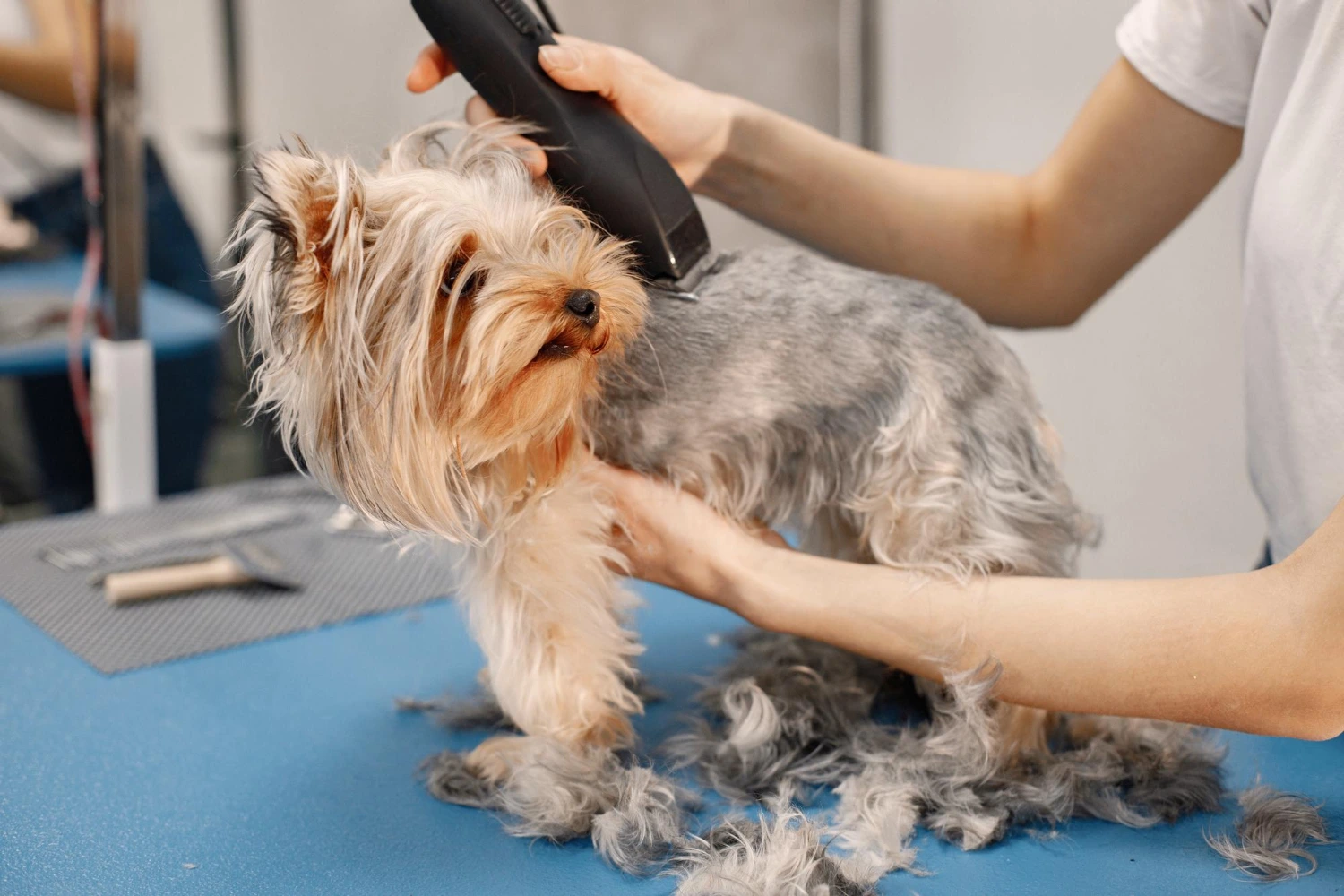
Small breeds with long, flowing coats — Shih Tzus, Bichon Frises, Maltese, and Yorkshire Terriers — are among the most high-maintenance dogs to keep in full coat. The fine, silky texture tangles easily, the face and eye area needs daily cleaning to prevent staining and infection, and professional grooming intervals are shorter than most owners expect.
Breeds with long, flowing coats
- Shih Tzu
- Bichon Frise
- Maltese
- Yorkshire Terrier (in full show coat; most pet Yorkies are kept clipped)
- Lhasa Apso
- Havanese
Why daily brushing is non-negotiable
Unlike larger breeds that can go several days between brush-outs, the fine coats on these breeds mat within 24–48 hours without brushing. The hair texture is similar to fine human hair — it tangles at the slightest movement, especially at contact points like behind the ears, under the chin, around the collar, and in the armpit area.
Skipping brushing for a week results in matting that is painful to remove and, for many small dogs, genuinely distressing. Severe matting in these breeds almost always requires a full shave-down because the coat is too fine to safely demat without causing skin damage.
Face and eye care: the detail most owners skip
Shih Tzus and Bichons are particularly prone to tear staining — reddish-brown discolouration below the inner corner of the eye. This is caused by porphyrins in tear secretions staining the pale coat.
Daily routine:
- Wipe below each eye with a damp cloth morning and evening
- Keep the coat around the eye trimmed short enough that it does not touch the eyeball
- After meals, wipe the muzzle area — food debris in the muzzle coat causes bacterial growth and staining
When to see the vet: Excessive tearing, green or yellow discharge, squinting, or redness in the eye itself is a veterinary issue, not a grooming one.
Home grooming routine
| Task | Frequency | Tools |
|---|---|---|
| Full brush-out | Daily (10–15 minutes) | Slicker brush + metal comb |
| Face and eye wipe | Morning and evening | Damp cloth or eye wipes |
| Detangling spray | As needed | Detangler spray |
| Bath | Every 2–3 weeks | Whitening shampoo (Bichon/Maltese), general moisturising for Shih Tzu |
| Check paw fur | Weekly | Trim fur between pads to prevent debris build-up |
Professional grooming for long coats
How often: Every 4–6 weeks for full-coat dogs. Dogs kept in “puppy cut” or “teddy bear cut” can go 6–8 weeks with good home maintenance.
What to ask for: Bring a reference photo. Common styles: “puppy cut” (short and practical), “teddy bear cut” (rounded face and body), “show cut” (full coat maintained long). Specify exactly how short you want the coat — “short” means different lengths to different groomers.
Cost in Kent: £40–£60 for a Bichon or Shih Tzu in good condition.
Smooth and Short Coats: Low Maintenance — Not Zero Maintenance
Short-coated breeds are the most forgiving in terms of home grooming, but “low maintenance” is not the same as “no maintenance.” Short coats still shed, still collect body odours, and still need regular attention at ears, nails, and skin folds on certain breeds.
Breeds with smooth or short coats
- Labrador Retriever (though technically double-coated — see above)
- Staffordshire Bull Terrier, American Bulldog
- French Bulldog, English Bulldog
- Boxer
- Greyhound, Whippet
- Dalmatian
- Weimaraner
- Beagle, Foxhound
What short-coated breeds actually need
Shedding management: Short-coat breeds often shed more than people expect. Staffords, Labs, and Dalmatians are year-round shedders. A rubber grooming mitt or bristle brush weekly removes shed hair before it embeds in sofas and clothing.
Skin fold care (brachycephalic breeds): French Bulldogs, Boxers, and English Bulldogs have facial skin folds that trap moisture, heat, and debris. These need cleaning with a damp cloth every 2–3 days. Uncleaned folds develop bacterial and yeast infections (a common cause of that distinctive “bully smell” that bathing doesn’t fix).
Nail growth: Short-coated breeds often need nails trimmed more frequently than their owners expect, because they spend more time on soft surfaces rather than naturally wearing nails down on hard ground. Long nails change gait and put stress on joints.
Home grooming routine
| Task | Frequency | Tools |
|---|---|---|
| Brush down | Weekly | Rubber grooming mitt, bristle brush, or rubber curry comb |
| Bath | Every 6–8 weeks | Gentle shampoo — overbathing strips natural oils |
| Skin fold cleaning (brachycephalic breeds) | Every 2–3 days | Damp cloth or specific fold wipes |
| Ear check | Weekly | Look for odour, redness, or discharge |
| Nail check | Every 3–4 weeks | Clip or book a nail trim at your groomer |
Professional grooming for short coats
How often: Every 8–12 weeks for a full bath, blow-out, nail trim, and ear clean. Short-coated breeds are less likely to need the coat work that longer coats require, but the bath, nail, and ear services are just as important.
What to ask for: Bath, blowout, nail trim, ear clean, and — for brachycephalic breeds — skin fold inspection. You can also ask your groomer to deshed the coat during the bath appointment, which removes loose undercoat before it ends up across your furniture.
Cost in Kent: £30–£45 for small to medium short-coated dogs. French Bulldogs and English Bulldogs sometimes cost more due to the time required for skin fold care.
Grooming Frequency Summary: Full Reference Table
| Coat type | Home brush | Bath | Professional |
|---|---|---|---|
| Double coat | 2–3× weekly (daily when shedding) | Every 6–8 weeks | Every 6–12 weeks |
| Wire/rough coat | Weekly | Every 6–8 weeks | Every 8–12 weeks (+ hand-strip every 4–6 months) |
| Curly/poodle | Daily | Every 3–4 weeks | Every 4–6 weeks |
| Silky/feathered | Daily on feathers, 3× weekly on body coat | Every 3–4 weeks | Every 6–8 weeks |
| Long, flowing | Daily | Every 2–3 weeks | Every 4–6 weeks |
| Short/smooth | Weekly | Every 6–8 weeks | Every 8–12 weeks |
For a deeper breakdown of grooming frequency by individual breed, see our guide: How Often Should You Groom Your Dog?
What to Tell Your Groomer
Grooming appointments go better when you communicate clearly upfront. These are the most important things to mention before every session:
1. Show them what you want (not just describe it)
Bring a photo on your phone of the style you’re asking for. “Short” and “tidy” mean different things to different groomers. A clear reference image removes all ambiguity.
2. Tell them about your home maintenance
Be honest about how often you brush at home. If you brush once a week and your doodle hasn’t been groomed in 10 weeks, say so. It changes the plan — a groomer who knows about the maintenance gap can inspect for matting before starting and set realistic expectations for what the finished style can be.
3. Mention any sensitivities or health issues
Dogs with arthritis, hip problems, or skin conditions need handling adjustments. Senior dogs may not tolerate being in a specific position for long periods. Anxious dogs need a groomer who will work at their pace. None of this is a problem — it’s essential information.
4. Ask the right questions
Specifically:
- “What nail length do you take them to?” (Some groomers leave nails longer than others)
- “Will you hand-finish or clip the ear feathering?” (Relevant for spaniels and terriers)
- “How do you handle it if you find matting I wasn’t aware of?” (Sets expectations before you drop off)
For a full list of the questions worth asking before choosing a groomer, see: 15 Questions to Ask When Choosing a Dog Groomer
Frequently Asked Questions
Does coat type change with age?
Yes, in several breeds. Puppy coats are often softer and more manageable than adult coats. In doodles and some terriers, the adult coat arrives at 6–12 months of age and can be significantly harder to maintain than the puppy coat. The change period is when most owners first encounter serious matting problems.
Can I change my dog’s coat type by grooming differently?
You cannot change the coat structure, but repeated clipping does change the coat texture in wire-coated and double-coated breeds. Clipping a terrier coat repeatedly softens the outer jacket over time. Shaving a double-coated breed can permanently alter how the coat regrows. Coat structure changes made by clipping cannot be reversed — they must grow out, which takes 12–24 months.
My doodle’s coat is curly in some places and straight in others — which does it belong to?
Mixed. Most doodle crosses have “fleece coats” — a wavy, mixed coat that sits between curly and straight. These coats still trap dead hair like a poodle coat and matt just as easily in high-friction zones. Treat the maintenance routine as you would a full curly coat — daily brushing and professional appointments every 4–6 weeks.
Why does my groomer charge more when my dog has mats?
Dematting is skilled, time-intensive work. Removing mats without cutting them out (when they can be safely removed) requires working through each section by hand with detangling products. Skin-tight matts that cannot be removed safely require careful clipper work underneath them. Both take significantly longer than a standard groom. Most groomers apply a dematting surcharge, and they are entitled to recommend a full clip-down if the matting is severe enough that attempting to demat would cause the dog pain.
Should I groom my dog at home between professional appointments?
Yes, absolutely. Professional grooming is not a substitute for home maintenance — it is the other way around. Home brushing between appointments is what allows professional groomers to achieve the style you want. Dogs that arrive at the groomer in good condition get better results, shorter appointment times, and lower costs. A 10-minute daily brush costs nothing; dematting surcharges and full clip-downs cost both money and (for the dog) comfort.
How do I know if my dog is double-coated?
Run your fingers against the direction of the coat growth. In a double-coated dog, you will see and feel a dense, soft underlayer beneath the outer guard hairs. The undercoat is usually lighter in colour and noticeably softer in texture. If you can separate the outer coat and see a distinct second layer underneath, it’s a double coat.
How much does dog grooming cost in Kent?
Grooming costs in Kent vary by dog size, coat type, coat condition, and the specific services required. As a rough reference: small dogs (Shih Tzu, Bichon) typically cost £40–£60; medium dogs (Cocker Spaniel, Border Collie) £45–£70; large dogs (Golden Retriever, German Shepherd) £55–£80+. Specialist services like hand-stripping or dematting are priced separately. See our full dog grooming prices guide for a detailed breakdown.
Find a groomer who knows your coat type
Not all groomers offer hand-stripping. Not all groomers have experience with doodle coats or brachycephalic breeds. The directory lists groomers across Kent with their specific services, so you can find one suited to your dog's exact needs.
Browse by location: Folkestone groomers · Dover groomers · Hythe groomers · Sandgate groomers. For a full breakdown of what professional grooming costs in the area, see our dog grooming prices guide. Not sure what to look for in a groomer? Read our guide to finding a good groomer in Kent.
Move from research into real local options
Use the directory to compare live grooming listings, or check the Kent price guide first if you want a quick cost sense-check before contacting a business.