How to Get Your Dog Used to Clippers and Dryers (UK Guide 2025)
Getting your dog comfortable with clippers and dryers takes patience, treats, and a step-by-step approach. Most dogs aren't born hating grooming equipment—they learn to fear it through bad experiences or sudden exposure to loud, vibrating tools they don't understand.
The good news? You can change how your dog feels about these tools. Using a technique called desensitisation, you'll gradually introduce clippers and dryers in a way that builds positive associations rather than fear. This works for puppies who've never seen grooming equipment, and it works for older dogs who've had rough experiences in the past.
This guide covers everything you need: why dogs react the way they do, how to introduce each piece of equipment step by step, what body language to watch for, and when to call in professional help. Whether you're preparing your puppy for their first grooming session or helping an anxious rescue dog overcome their fears, you'll find practical advice that actually works.
Important Disclaimer
This article provides general information for dog owners. If your dog shows signs of severe anxiety, aggression, or fear, please consult a qualified animal behaviourist or veterinarian. Never administer medication to your dog without veterinary advice. Individual dogs may respond differently to training approaches, and professional guidance should be sought for difficult cases.
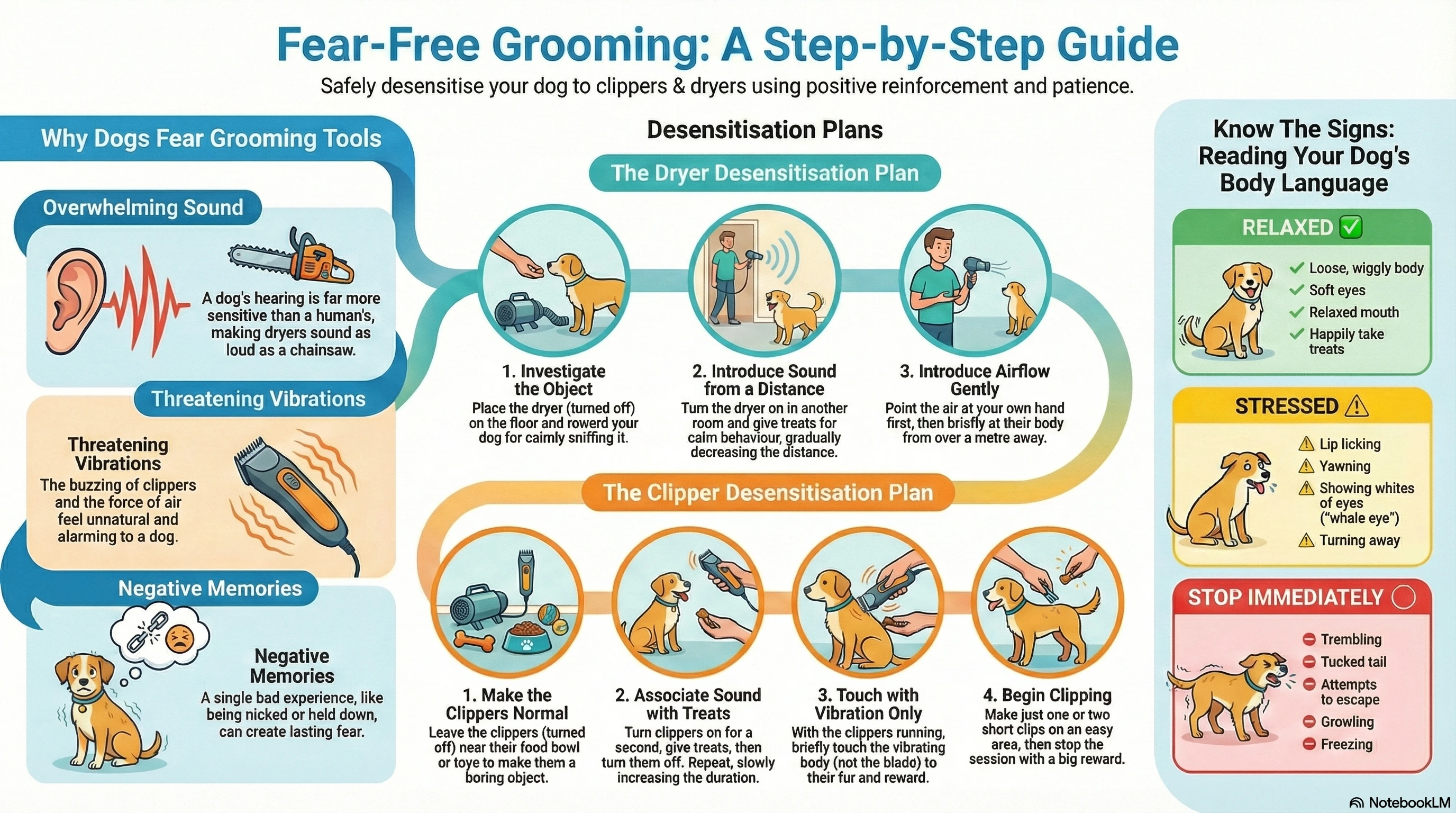
Complete overview of the desensitisation process for clippers and dryers
Why Dogs Fear Dryers and Clippers
Before you can fix the problem, it helps to know what's actually going on in your dog's head. Their reaction isn't stubbornness or bad behaviour—it's a genuine fear response triggered by their senses.
Their Hearing Is Far More Sensitive Than Yours
Dogs hear sounds at frequencies between 40 Hz and 60,000 Hz—compared to humans, who max out around 20,000 Hz.[1] That means they're picking up high-pitched sounds you can't even detect. What sounds like a moderately loud dryer to you might be overwhelming to them.
Here's the really concerning bit: research from Colorado State University found that professional grooming dryers produce noise levels between 105 and 108 decibels at close range.[2] To put that in perspective, sustained exposure to sounds above 70 decibels can damage hearing over time. Your dog is experiencing something equivalent to standing next to a chainsaw or rock concert—no wonder they panic.
Vibration Feels Like a Threat
All electric clippers vibrate. Even so-called "silent" models produce some level of buzzing sensation against the skin. For a dog who's never experienced this, the vibration can feel alarming—something touching them that's moving on its own.
The same goes for the blast of air from a dryer. It's not just loud; it's also a physical force pushing against their fur and skin from an invisible source. Dogs can't reason through what's happening, so their instinct is to escape.
Past Experiences Matter
If your dog has had a negative grooming experience—being held down, nicked by clippers, or frightened by sudden loud noises—that memory sticks. Dogs are excellent at forming negative associations. One bad session at a groomers can create months of fear.
Rescue dogs are particularly vulnerable here. You often don't know what they've been through before they came to you, and grooming tools might trigger fear responses from experiences you'll never know about.
The Basics of Desensitisation Training
Desensitisation is a proven behaviour modification technique used by veterinary behaviourists and certified dog trainers worldwide.[3] The principle is simple: expose your dog to a feared stimulus at such a low intensity that they don't react, then gradually increase exposure while keeping them calm.
Use High-Value Treats
This isn't the time for dry kibble. You need something your dog genuinely loves—small pieces of chicken, cheese, hot dog, or whatever makes their eyes light up. The goal is to pair the scary thing with something so good that their brain starts making new associations.
Every time your dog sees, hears, or feels the grooming equipment, they should immediately get a treat. Eventually, they'll start thinking "clippers appear = good things happen" instead of "clippers appear = run away."
Keep Sessions Short
Five to ten minutes is plenty. You want to end each session while your dog is still relaxed and happy—not push them until they get stressed. Short, positive sessions repeated daily will get you further than one long session that ends in panic.
Never Force It
If your dog shows signs of stress, stop immediately and go back to the previous step they were comfortable with. Pushing through their fear doesn't teach them to cope—it teaches them that grooming is as bad as they thought it was, and that you can't be trusted to keep them safe.
Step-by-Step Guide: Getting Your Dog Used to the Dryer
The dryer is often the hardest piece of equipment for dogs to accept because it attacks multiple senses at once—loud noise, rushing air, and an unfamiliar object pointed at them. Take this one slowly.
Phase 1: Let Them Investigate (Dryer Off)
Place the dryer on the floor in your usual training space. Don't turn it on—just let it sit there while your dog explores. Every time they sniff it or look at it calmly, give them a treat. Do this for several sessions until they're completely relaxed around the object itself.
Phase 2: Introduce the Sound at a Distance
Turn the dryer on in another room with the door closed. Stay with your dog in your training space, treating them continuously while the distant sound plays. If they seem unbothered, brilliant. If they're nervous, increase the distance or close another door to muffle it further.
Over several sessions, gradually bring the running dryer closer—but keep it pointed away from your dog. The goal is getting them used to the sound before adding the sensation of air.
Phase 3: Add the Airflow Gradually
Once your dog is relaxed with the dryer running nearby, start introducing the airflow. Begin by pointing it at your own hand while treating your dog for watching calmly. Then direct a brief puff of air at their body (avoiding the face and ears) from a distance of at least a metre.
Move closer only when they're completely relaxed at the current distance. This might take days or weeks—that's fine. You're building lasting confidence, not rushing to tick a box.
Tips to Make Drying Easier
- Use a Happy Hoodie - This soft fabric band wraps around your dog's head, covering their ears to muffle noise and block the sensation of rushing air. Professional groomers swear by them for nervous dogs.[4]
- Choose pet-specific dryers - Human hair dryers can reach temperatures that burn sensitive dog skin, which is thinner than ours.[5] Pet dryers run cooler and often have adjustable speed settings to reduce noise.
- Skip the face - Never point a dryer at your dog's face. Dry their head last, using a towel or the lowest possible setting from a distance.
- Consider alternatives - Absorbent microfibre towels or drying coats can reduce the time you need to use a mechanical dryer. Some dogs tolerate a quick towel-dry followed by air drying far better than a full blow-dry.
🎧 Recommended Products: Calming During Drying
Happy Hoodie Original:Happy Hoodie Calming Band - The original groomer-approved ear cover that muffles dryer noise and blocks rushing air. Used by professional groomers worldwide to calm nervous dogs during force drying.
Buy on Amazon UK →
Microfibre Drying Coat:Zorela Dog Drying Coat - Super absorbent 400gsm microfibre robe that dramatically reduces mechanical drying time. Perfect for dogs who tolerate towel-drying better than blow-drying.
Buy on Amazon UK →
Step-by-Step Guide: Getting Your Dog Used to Clippers
Clippers combine two challenges: noise and vibration. The approach is similar to dryer training, but you'll also need to get your dog comfortable with the physical sensation of the tool against their body.
Phase 1: Make the Clippers Part of the Furniture
Leave the clippers (switched off) somewhere your dog can see them during normal activities. Place them near their food bowl at mealtimes, or set them on the floor during play sessions. You want the clippers to become a boring, everyday object rather than something that only appears when grooming happens.
Phase 2: Introduce the Sound
Turn the clippers on for just a few seconds while they're across the room. Immediately start feeding treats. Turn them off, stop treating. Repeat this pattern so your dog learns: clippers buzzing = treats appearing.
Gradually increase how long the clippers run, and slowly bring them closer to your dog. If at any point they seem worried, go back to a greater distance and shorter duration.
Phase 3: Touch Without Cutting
Before you introduce the vibration, get your dog used to the feel of the clipper body against their fur while it's switched off. Run the back of the clippers gently over their neck, shoulders, and body while giving treats. This mimics the sensation of grooming without the scary buzzing.
Once they're comfortable with this, try the same thing with the clippers running—but don't actually clip any fur yet. Just let them feel the vibration briefly against their body, treat heavily, and stop. Build up the duration over many sessions.
Phase 4: Start Clipping
When your dog is relaxed with the vibrating clippers touching their body, you can start actual grooming. Do just a few strokes in one area, then stop and reward. End the session long before they show any sign of stress.
Build up gradually over weeks, adding more areas and longer sessions as your dog's tolerance grows. Always clip in the direction of hair growth to avoid pulling or irritating the skin.
Training Shortcuts That Help
- Practice with an electric toothbrush - These make a similar buzzing sound and vibration at a much lower intensity. Getting your dog comfortable with a toothbrush against their body can be a useful stepping stone to real clippers.
- Look for quieter clippers - Some models are specifically designed to reduce noise. They cost a bit more but can make a real difference for noise-sensitive dogs.
- Warm the blades - Cold metal against skin can make dogs flinch. Run the clippers for a minute before starting so the blades are warm (but not hot).
- Keep blades sharp - Dull blades pull and tug at fur instead of cutting cleanly, which hurts. If your dog suddenly becomes resistant to clippers they previously tolerated, check the blade condition.
Reading Your Dog's Body Language
Your dog can't tell you in words when they're getting stressed, but their body gives you plenty of warning signs if you know what to look for. The ASPCA and other animal behaviour experts identify several key signals to watch during grooming.[6]
Signs Your Dog Is Relaxed
- Loose, wiggly body - No tension in their muscles
- Soft eyes - Not wide or staring
- Relaxed mouth - May be slightly open, not clamped shut
- Neutral tail position - Not tucked or held rigidly
- Eating treats normally - A dog who can eat is usually a dog who isn't panicking
Early Warning Signs of Stress
These subtle signals mean your dog is getting uncomfortable. If you see them, slow down or take a break:
- Whale eye - You can see the whites of their eyes because they're looking away while keeping their head still
- Lip licking - Quick tongue flicks when no food is present are a stress signal, not hunger
- Yawning - Frequent yawning outside of normal tired contexts indicates tension
- Turning away - Looking or leaning away from the equipment
- Refusing treats - A dog too stressed to eat is over threshold
Signs You Need to Stop Immediately
These signals mean your dog is genuinely frightened. Stop the session right away:
- Trembling or shaking
- Tail tucked tightly under body
- Trying to escape or hide
- Heavy panting (when not hot)
- Freezing completely still
- Growling, snapping, or showing teeth
If your dog reaches this level of fear, you've pushed too fast. Go back several steps in your training and progress more slowly next time. For a comprehensive guide on understanding and managing anxious dogs during grooming, see our article on how to calm an anxious dog.
Creating a Calm Grooming Environment
Where and how you groom makes a difference. Set yourself up for success by controlling the environment before you even pick up the equipment.
Choose the Right Surface
Dogs feel vulnerable when they're slipping around. Use a non-slip rubber mat on whatever surface you're grooming on—whether that's the floor, a table, or in the bath. A secure footing helps them feel more in control.
Minimise Background Noise
Choose a quiet room away from street noise, other pets, and household chaos. The dryer or clippers will be loud enough without adding to the sensory overload. Some dogs respond well to calming music played softly in the background.
Use Calming Aids
Several tools can help take the edge off anxiety:
- Lick mats - Smear peanut butter, cream cheese, or wet food on a textured lick mat and stick it to the wall or floor. The repetitive licking releases calming endorphins and gives your dog something pleasant to focus on.
- Pheromone sprays - Products like Adaptil release synthetic versions of the calming pheromones mother dogs produce. Spray the grooming area 15 minutes before you start.
- Familiar scents - Having their own blanket or bed nearby can provide comfort.
🧘 Recommended Products: Calming Aids for Grooming
LickiMat for Grooming:LickiMat Splash with Suction Cup - Stick to any smooth surface during grooming sessions. Spread with peanut butter or cream cheese to release calming endorphins through repetitive licking.
Buy on Amazon UK →
Adaptil Calming Spray:Adaptil Transport Spray 60ml - Scientifically-proven pheromone spray that helps reduce anxiety. Spray on the grooming area 15 minutes before you start for a calmer session.
Buy on Amazon UK →
Time It Right
Don't try to groom a dog who's bursting with energy. A walk or play session beforehand can take the edge off their excitement and make them more likely to settle. Equally, don't groom when they're overtired or hungry.
When to Call in a Professional
Some dogs need more help than you can provide at home. There's no shame in recognising when professional support is the right call.
Signs You Need Expert Help
- Severe fear or panic - If your dog is genuinely terrified (hiding, shaking uncontrollably, or becoming aggressive) rather than just nervous
- No progress after weeks of training - If consistent daily work isn't producing any improvement
- Aggression - If your dog has bitten or tried to bite during grooming, stop immediately and seek professional guidance
- Your own frustration - If you're getting stressed and impatient, your dog will pick up on it and the cycle gets worse
Who Can Help
- Certified dog behaviourists - Look for qualifications from organisations like the Association of Pet Behaviour Counsellors (APBC) or the Animal Behaviour and Training Council (ABTC)
- Fear-free certified groomers - Some professional groomers specialise in nervous dogs and use low-stress handling techniques. Ask about their approach before booking.
- Your vet - In severe cases, your vet may recommend anti-anxiety medication to use alongside training, or can refer you to a veterinary behaviourist
If you're in Kent and looking for a groomer who's experienced with anxious dogs, check our guides to dog groomers in Folkestone, Dover, or Hythe. Many local groomers are happy to discuss their approach to nervous dogs before you book.
Frequently Asked Questions
How long does it take to desensitise a dog to clippers?
It depends on the dog. Some puppies with no negative history can get comfortable within a week or two of daily practice. Dogs with past trauma or strong fear responses may take several months. The key is consistency—daily short sessions work better than occasional long ones.
Can I use human hair clippers on my dog?
It's not recommended. Human clippers are designed for different hair texture, often run hotter, and typically produce more noise and vibration. Dog-specific clippers are safer, quieter, and designed to work with your dog's coat type.
What if my dog won't take treats during grooming?
A dog who refuses treats is too stressed to learn. This means you've moved too fast. Go back to an earlier step where they were comfortable enough to eat, and progress more slowly from there.
Is it safe to use a human hair dryer on dogs?
Only with extreme caution. Human hair dryers can reach temperatures that burn dog skin, which is thinner and more sensitive than ours. If you must use one, keep it on the lowest heat setting, hold it at least 30cm away, keep it moving constantly, and never point it at their face. A proper pet dryer is a safer investment.
Should I sedate my dog for grooming?
Only under veterinary guidance. Sedation carries risks and doesn't address the underlying fear—your dog will still be terrified next time. However, in severe cases, your vet may recommend anti-anxiety medication to use alongside behaviour modification training. This should always be discussed with a qualified veterinarian.
Important Disclaimer
This article provides general information for dog owners. If your dog shows signs of severe anxiety, aggression, or fear, please consult a qualified animal behaviourist or veterinarian. Never administer medication to your dog without veterinary advice. Individual dogs may respond differently to training approaches, and professional guidance should be sought for difficult cases.
References
- Wikipedia. (2024). Hearing range. Accessed December 2024.
- Neer, W. L., & Murphy, W. J. (2015). Noise impacts from professional dog grooming forced-air dryers. PubMed Central. National Institutes of Health.
- VCA Animal Hospitals. (2024). Overcoming Fears with Desensitization and Counterconditioning.
- Happy Hoodie. (2024). Happy Hoodie For Groomers. Official product information.
- Vetstreet. (2024). Is It Safe to Use a Hair Dryer on My Dog?.
- ASPCA Professional. (2024). 7 Tips on Canine Body Language.