How to Muzzle Train a Dog for Grooming (UK Guide 2025)
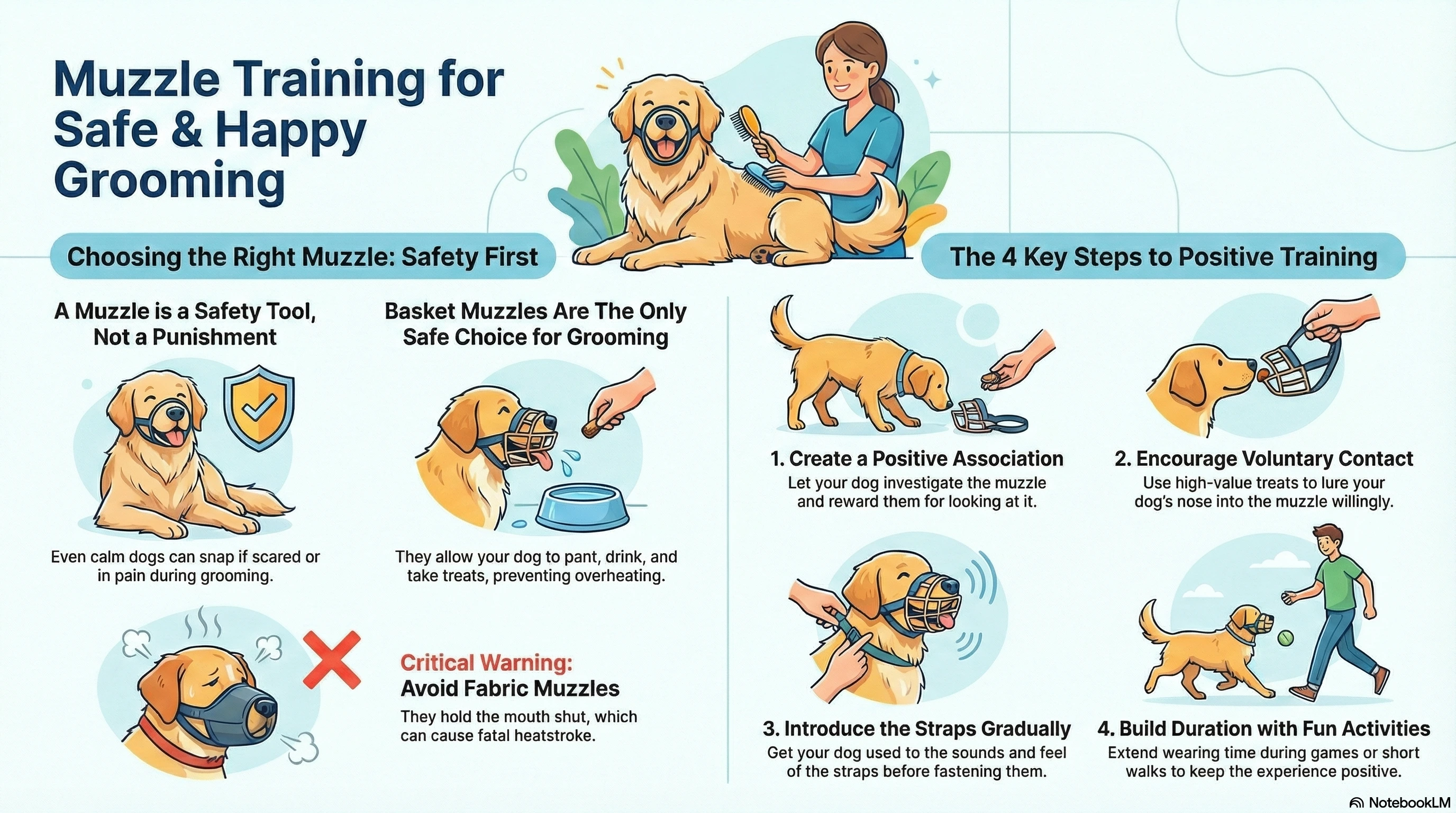
A muzzle is a safety tool, not a sign that your dog is dangerous. Even the calmest, friendliest dog can react if they're frightened or in pain during grooming. When a groomer is working near sensitive areas—ears, paws, or tight mats—a well-trained muzzle can prevent defensive snaps and keep everyone safe.
Dogs Trust puts it simply: "It's useful for all dogs to be able to wear a muzzle comfortably."[1] Muzzle training isn't about labelling your dog as aggressive. It's responsible ownership. A dog who's been trained to accept a muzzle is ready for anything—from a stressful vet visit to a tricky grooming session.
This guide covers everything you need to know about muzzle training for grooming, from choosing the right type to a step-by-step training plan. We'll also explain how to read your dog's body language and spot stress before it becomes a problem.
Important Notice
If your dog has a history of aggression, severe anxiety, or reactive behaviour, please consult a qualified veterinarian or accredited behaviourist before beginning muzzle training. This guide is for general educational purposes and does not replace professional advice tailored to your dog's individual needs.
Why Muzzle Your Dog for Grooming?
Grooming involves sensitive areas and sometimes uncomfortable tasks. Ears need cleaning. Nails need clipping. Mats need brushing out. Any of these can trigger a defensive reaction, even from a dog who's normally gentle.
Preventing Defensive Reactions
Pain, fear, or being pushed past their comfort threshold can cause any dog to snap. This isn't aggression—it's instinct. Dogs Trust notes that "fear, pain or illness can affect the way a dog feels and behaves."[1] A muzzle provides a safety boundary that allows the groomer to work without worry.
Safer Grooming for Everyone
A muzzled dog is less likely to lunge or nip during grooming. This helps prevent accidental cuts from clippers and scissors. It also reduces the risk of falls from the grooming table if the dog suddenly jerks away.
Access to Professional Grooming
Many UK grooming salons require muzzles for reactive or nervous dogs to protect their staff. If your dog is already muzzle trained, you'll have more options when choosing a groomer. Some dogs who would otherwise be refused grooming appointments can be accepted when they arrive calmly wearing their muzzle.
Building a Predictable Routine
Using a muzzle consistently can actually help your dog settle. When the muzzle appears, they know what to expect. Over time, this predictability reduces anxiety because the grooming session becomes a familiar routine rather than a surprise.
Choosing the Right Muzzle for Grooming
Not all muzzles are created equal. The type you choose matters enormously for your dog's comfort and safety.
Basket Muzzles: The Recommended Choice
Basket muzzles are the safest option for grooming because they allow your dog to pant, drink water, and take treats. Dogs Trust recommends choosing "a muzzle that your dog can eat, drink and pant through, such as a basket type muzzle."[1]
Popular basket muzzles in the UK include:
- Baskerville Ultra Muzzle – Made from flexible thermoplastic rubber that can be shaped in warm water for a custom fit[2]
- Baskerville Classic – A traditional wire basket design that's durable and well-ventilated
- Leather basket muzzles – Often handmade, these offer comfort but may require more maintenance
The gaps in basket muzzles let you reward your dog with treats during training and throughout the grooming session. This is essential for building positive associations.
Baskerville Ultra Muzzle
Flexible thermoplastic rubber that can be shaped in hot water for a custom fit. Allows panting, drinking, and treat-taking. Sizes 1-6 available for all breeds.
Fabric Muzzles: A Serious Warning
Critical Safety Warning
Fabric muzzles (also called soft muzzles or mesh muzzles) hold the mouth shut and prevent panting. They should never be used for more than a few minutes as they can cause heatstroke and death. Do not use fabric muzzles for grooming sessions.
Dogs regulate their body temperature primarily through panting. The Company of Animals describes fabric muzzles as "a quiet cruelty" because they restrict this vital cooling mechanism.[3]
A dog's normal body temperature is between 38.3°C and 39.2°C. An increase of just a few degrees can cause major distress and then rapid death.[3] Even a visit to the vet or groomer in warm weather with a fabric muzzle could be life-threatening.
Muzzles for Flat-Faced Breeds
Brachycephalic breeds—Bulldogs, French Bulldogs, Pugs, Shih Tzus, and similar flat-faced dogs—have a shorter muzzle, which makes standard basket muzzles a poor fit. The Kennel Club notes that flat-faced dogs "may find it harder to lose heat from panting, because a shorter muzzle means a smaller surface area to cool them down."[4]
For these breeds, consider:
- Baskerville Wide Fit Muzzle – Specifically designed for brachycephalic dogs with wide, short snouts[2]
- Short snout basket muzzles – Various brands offer designs that accommodate flat faces while still allowing panting
Always check that your flat-faced dog can open their mouth fully and pant freely. These breeds already struggle with breathing, so proper airflow is even more critical.
Baskerville Wide Fit Muzzle
Specifically designed for brachycephalic breeds—Bulldogs, Boxers, Rottweilers, and other broad-nosed dogs. Allows full panting and drinking.
Getting the Right Fit
A poorly fitted muzzle will be uncomfortable, which makes training harder and can cause rubbing or sores. Take the time to measure properly before buying.
How to Measure Your Dog
You'll need a soft tape measure and ideally a helper to keep your dog still. According to the Baskerville sizing guide, you need two measurements:[2]
- Nose length – Measure from the tip of your dog's nose to just below their eyes
- Nose circumference – Measure around the widest part of your dog's snout, where the muzzle basket would sit
Important: Measure with your dog's mouth open, not closed. Your dog needs to pant fully inside the muzzle, so you need to account for that space.
Checking the Fit
Once you have the muzzle, check these points:
- Pant room – Your dog should be able to open their mouth fully and pant normally. This is critical for temperature regulation.
- The "one finger" rule – Straps should be snug enough that your dog can't remove the muzzle, but loose enough to slide one finger underneath.
- No rubbing – The muzzle shouldn't dig into your dog's face or obscure their vision. Check behind the ears where the strap sits.
- Proper length – Dogs Trust advises that the muzzle should cover around two-thirds of your dog's nose.[1]
If the muzzle causes irritation or your dog can't behave normally while wearing it, the size, shape, or material may not be right. Some basket muzzles (like the Baskerville Ultra) can be reshaped in hot water to improve the fit.[2]
Step-by-Step Muzzle Training
The key to successful muzzle training is patience. Rushing creates negative associations. Go at your dog's pace, keep sessions short, and always end on a positive note.
Before You Start
Have high-value treats ready—something your dog loves. Squeeze tubes of dog-safe pâté or xylitol-free peanut butter work well because you can dispense them through the gaps in a basket muzzle. Never use the muzzle as punishment.
Arden Grange Liver Paste
Highly palatable training paste that's perfect for muzzle training. Grain-free and ideal for dispensing through basket muzzle gaps. Multi-pack for extended training.
Step 1: Introduce the Muzzle
Dogs Trust recommends starting in a familiar, quiet area where you and your dog are relaxed.[1] The goal is to create positive associations before the muzzle ever goes on.
- Hold the muzzle behind your back. Bring it into view.
- When your dog looks at the muzzle, mark the behaviour (say "yes" or use a clicker) and toss a treat away from you.
- Put the muzzle behind your back again and repeat—lots of times.
Then place the muzzle on the floor with treats scattered around and inside it. Let your dog investigate at their own pace.
Step 2: Turn It Into a Treat Dispenser
Hold the muzzle at your dog's nose height with a treat or squeeze of pâté just inside the opening. Let your dog put their nose in voluntarily to get the reward.
Gradually move the treat deeper into the muzzle so your dog puts more of their nose inside. The important thing here is choice—your dog should always be free to remove their face whenever they want.[1]
Step 3: Add Duration
Once your dog happily puts their nose into the muzzle, start building duration. Post treats through the end of the muzzle while they keep their nose inside. A few seconds is enough at first.
You can also try stepping backwards slightly while holding the muzzle, encouraging your dog to walk with you. This gets them used to movement while wearing it.
Step 4: Introduce the Straps
Don't rush to fasten the straps. First, get your dog used to the sounds and sensations.
- Click the buckle at a distance while your dog is in the room. If they stay calm, reward them.
- Gradually move closer each time you click the buckle.
- Start touching and moving the straps while your dog's nose is in the muzzle, but don't fasten them yet.
- Drape the straps loosely over your dog's neck, then let them slip off. Mark and reward calm behaviour.
Step 5: Fasten and Release
When your dog is comfortable with the straps being handled, try fastening them briefly. Immediately unfasten, mark, and reward.
Dogs Trust advises starting with just a few seconds, then increasing in very small increments.[1] If your dog seems unsure at any point, go back a step and practise there longer.
Step 6: Build Duration and Add Activities
Once your dog is relaxed wearing the muzzle with the straps fastened, gradually extend wearing time. Keep them occupied with fun activities:
- Play "find it" games with treats around the room
- Practise simple commands like "sit" and reward through the muzzle
- Take short walks in the garden or a quiet area
Over time, reduce how often you reward while they're wearing it. Eventually, your dog will wear the muzzle calmly without constant treats.
Step 7: Keep Practising
Even dogs who wear a muzzle regularly benefit from refresher training. Redo these steps occasionally to maintain positive associations. This is especially important if your dog only wears a muzzle for grooming appointments every few weeks or months.
Reading Your Dog's Body Language
Dogs communicate stress through subtle signals. Catching these early means you can take a break before your dog becomes overwhelmed.
Signs of Stress to Watch For
- Whale eye – When your dog turns their head away but keeps their eyes fixed on something, showing the whites of their eyes in a crescent shape. This indicates anxiety or stress.[5]
- Lip licking – Quick, repetitive licking of the lips or nose when there's no food present often signals discomfort.
- Yawning – Stress yawns are different from tired yawns—they're often more exaggerated and happen in situations that wouldn't normally cause tiredness.
- Panting when it's not hot – Excessive panting unrelated to temperature or exercise can indicate anxiety.
- Freezing – Going very still and tense is a warning sign that your dog is uncomfortable.
- Trying to escape – Turning away, backing up, or trying to leave the situation.
When to Stop Training
If your dog starts pawing at the muzzle or seems shut down, stop the session immediately. Dogs Trust advises that you should "go back a stage at which they were relaxed and practise for a bit longer."[1]
Some rubbing of the face after wearing a muzzle is normal. But if your dog seems persistently distressed or the muzzle is causing skin irritation, speak to your vet about finding a better fitting option.
If You Need the Muzzle Before Training Is Complete
Sometimes you'll need to use a muzzle before your dog is fully trained—for an emergency vet visit, for example. If this happens, Dogs Trust recommends using a completely different muzzle for the emergency situation. This way, your training muzzle keeps its positive associations.[1]
Frequently Asked Questions
How long does muzzle training take?
Most dogs take between two and four weeks to become comfortable with a muzzle, but some need longer. The timeline depends on your dog's temperament, any previous negative experiences with muzzles, and how consistent you are with short daily training sessions. Rushing creates setbacks, so let your dog set the pace.
Will a muzzle make my dog more anxious about grooming?
Not if you train properly. Dogs Trust notes that "dogs can learn to enjoy wearing muzzles in the same way that they learn to wear a collar or harness."[1] The key is building positive associations before using the muzzle in a grooming context. A dog who's been trained to like their muzzle may actually feel more secure during grooming because the routine is familiar.
Can my dog drink water while wearing a basket muzzle?
Yes, this is one of the main advantages of basket muzzles. The gaps allow your dog to drink water, pant to regulate their temperature, and accept treats. This makes them safe for extended wear during grooming sessions, walks, or vet visits.
My dog has never bitten anyone—do they still need muzzle training?
Muzzle training is good preparation for any dog. Grooming can involve pain (removing mats, clipping nails too short accidentally) or scary experiences (loud clippers, unfamiliar handling). Even gentle dogs can snap when pushed past their limit. Having a dog who accepts a muzzle calmly means you're prepared for any situation.
Final Thoughts
Muzzle training isn't about expecting the worst from your dog. It's about being prepared. A well-trained muzzle gives your groomer confidence to work safely. It gives your vet quick access in emergencies. And it gives you peace of mind.
Think of the muzzle like a seatbelt. You don't wear it because you expect a crash—you wear it so everyone stays safe no matter what happens. With patience and positive training, your dog can learn to see their muzzle as just another part of their routine, no different from their collar or lead.
Take your time, keep sessions short, and celebrate small wins. Before long, you'll have a dog who wears their muzzle happily—and a groomer who's grateful for your responsible approach.
References
This guide is based on verified sources from UK animal welfare organisations, veterinary bodies, and muzzle manufacturers: