Dog Sofas: UK Brands Worth the Investment
Your dog spends between 12 and 16 hours sleeping every day. Puppies and senior dogs push that even higher—up to 18 hours in some cases.[1] That's more time than they spend doing anything else. So where they sleep matters.
A dog sofa—sometimes called a bolster bed—gives your dog their own raised, cushioned space. The design mimics the arm of your sofa, which is probably where they'd rather be anyway. The raised sides create a cosy spot to rest their head, and the enclosed feeling helps anxious dogs settle.
But there's more to it than comfort. A quality dog sofa can support ageing joints, reduce morning stiffness, and stop your furniture from becoming a fur-covered mess. If you're weighing up whether it's worth spending more than £20 on a dog bed, this guide covers what actually matters: the health benefits, what to look for when buying, and how to choose the right size.
Amazon UK Top Pick
Looking for a quality dog sofa right now? The Bedsure Orthopaedic Dog Sofa Bed offers excellent value with memory foam support, waterproof liner, and washable cover. Available in multiple sizes for all breeds.
Why Dogs Love Sofas (And Why They Shouldn't Use Yours)
Dogs gravitate towards sofas for good reason. The raised sides provide security, the cushioning supports their body, and the height lets them keep watch over the room. These aren't random preferences—they're instinctive behaviours.
The trouble is, your sofa wasn't designed for dogs. The fabric can't handle constant scratching. The cushions trap hair, dander, and the occasional muddy paw print. And once your dog claims a spot, you've lost it forever.
A dedicated dog sofa solves this. It gives your dog everything they want—the raised edges, the cushioning, the vantage point—without sacrificing your furniture. Better still, dog sofas are built to handle the wear and tear that comes with daily use by a creature with claws.
Security and Anxiety Relief
The bolster design—those raised sides around the edge—does more than look nice. It creates a semi-enclosed space that triggers your dog's nesting instincts. Think of it as a modern version of the den their ancestors would have slept in.
For anxious dogs, this matters. The sides provide a physical boundary that helps them feel protected. Dogs who struggle with separation anxiety or who startle easily often settle faster in beds with raised edges. The bolster also gives them somewhere to rest their head—a position most dogs naturally prefer, just like you'd use a pillow.
No Space to Wash at Home?
Self-service dog wash stations across the UK offer warm water, raised tubs, and professional dryers—perfect for muddy post-walk cleanups without the mess at home.
Find Dog Wash Locations(dogwashnearme.co.uk)Orthopaedic Support: Why It Matters More Than You Think
Joint problems are far more common in dogs than most owners realise. Research published in Frontiers in Veterinary Science found that osteoarthritis prevalence in dogs ranges from 2.5% in general populations to over 80% in certain high-risk groups, depending on breed, age, and weight.[2] Older dogs, larger breeds, and overweight dogs face the highest risk.
The average age at first osteoarthritis diagnosis is around 10.5 years, according to data from the Royal Veterinary College's VetCompass programme.[3] But the condition develops gradually. By the time you notice stiffness or reluctance to jump, the damage is already underway.
How Orthopaedic Dog Beds Help
Quality dog sofas use high-density foam, memory foam, or egg-crate foam structures. These materials work by distributing your dog's weight evenly across the sleeping surface, reducing pressure on the joints that take the most strain—hips, shoulders, and elbows.
Dr Joseph Wakshlag, a veterinary nutritionist at Cornell University, explains the principle: "It is a rather simple concept regarding pressure points."[4] The foam contours to your dog's body shape, supporting the spine in a neutral position and allowing muscles to relax properly during sleep.
The practical benefits show up in your dog's daily life:
- Easier mornings - dogs with joint stiffness often struggle to rise after sleeping on hard or thin surfaces
- Better recovery - proper support helps muscles recover from daily activity
- Less limping - reduced pressure on problem joints means less inflammation
- More restful sleep - dogs that aren't constantly shifting to get comfortable sleep deeper
You don't need to wait until your dog shows signs of arthritis. Prevention works better than treatment. A supportive bed from puppyhood can help protect joints over your dog's entire life. For more on orthopaedic options for big dogs, see our guide to the best orthopaedic dog beds for large breeds.
What to Look for When Buying
Dog sofas range from under £30 to several hundred pounds. The price difference usually comes down to materials and construction. Here's what separates a bed that lasts from one that falls apart in months.
Cleaning: The Feature Most People Overlook
The CDC recommends washing pet bedding at least once a week to reduce bacteria that can affect both pets and people.[5] For most dog owners, every one to two weeks is realistic. The key is making cleaning easy enough that you'll actually do it.
Look for these features:
- Removable, machine-washable covers - essential for regular cleaning
- Zipped waterproof liner - protects the foam from accidents, especially important for puppies and senior dogs
- Non-slip base - rubber grips or textured backing keep the bed in place on hard floors
Skip beds where the cover is stitched directly to the foam. You'll end up having to wash the entire thing, which damages the foam over time and takes forever to dry.
Fabrics That Survive Dogs
Your dog has claws. They scratch, dig, and circle before lying down. The fabric needs to handle this without snagging or tearing.
The Martindale test measures how many times a fabric can be rubbed before showing wear. Fabrics rated at 30,000 rubs or higher are considered suitable for heavy domestic use.[6] Most manufacturers don't advertise this rating, but you can ask or check the product specifications.
Fabrics that work well:
- Microfibre or microsuede - tight weave resists snags, wipes clean easily
- Performance polyester blends - durable and stain-resistant
- Synthetic velvet - surprisingly hard-wearing with a tight pile
Fabrics to avoid if your dog is a digger or scratcher:
- Bouclé or chunky knits - loose loops catch on claws
- High-pile velvet - shows scratch marks and wear quickly
- Loose weaves - pull threads easily
Style That Fits Your Home
Dog beds don't have to be eyesores. Modern dog sofas come in designs that look like actual furniture—miniature chaise longues, classic bolster styles, and contemporary rectangular shapes with low sides.
For colour, mid-tones work best. Greys, slates, and muted patterns hide hair and minor dirt between washes. Pure white shows everything. Black shows light hair. You'll save yourself cleaning time with something in between.
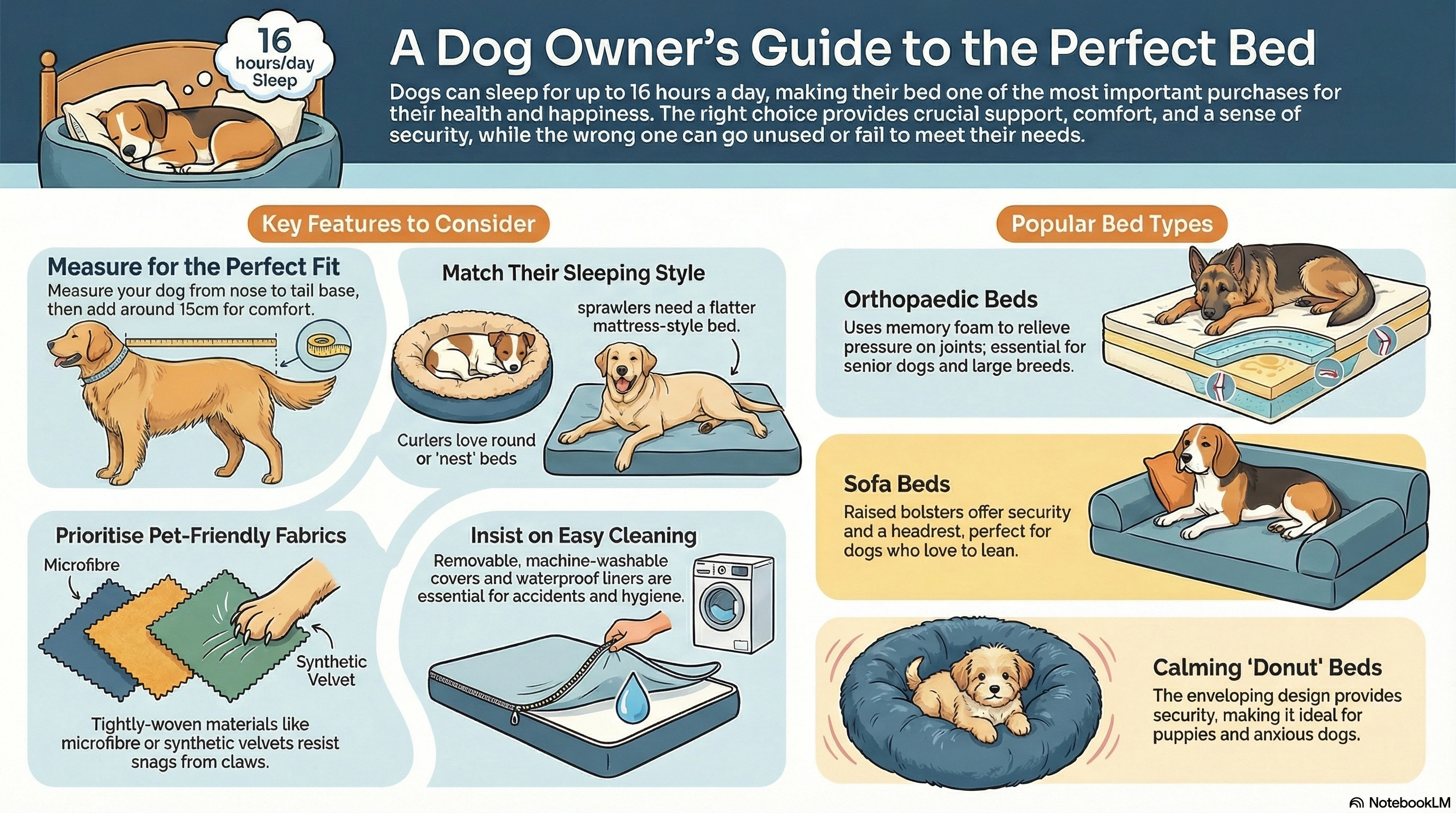
Key features to consider when choosing a dog sofa
Getting the Size Right
A bed that's too small defeats the purpose. Your dog needs room to stretch out completely, not curl up because there's no other option.
How to Measure
Wait until your dog is lying on their side, fully stretched out. Measure from nose to tail base, then add 15cm (about 6 inches). Do the same for width—measure how wide they are when sprawled and add the same buffer.
If you're choosing between two sizes, go larger. A slightly bigger bed never causes problems. A slightly smaller one means cramped sleeping and wasted money.
Consider Sleeping Style
Dogs sleep in different positions, and their preferred style affects what bed works best:
- Curlers - dogs who sleep in a tight ball often prefer beds with higher bolsters all around, creating a nest-like feel
- Sprawlers - dogs who stretch out fully need maximum flat surface area, with lower sides or an open front
- Leaners - dogs who prop themselves against furniture do well with one high side to rest against
Watch your dog for a few days before buying. Their natural sleeping position tells you which design will work.
Where to Put It
Placement matters more than you might think. The wrong spot means your dog won't use the bed, no matter how comfortable it is.
The Ideal Location
Dogs want to be part of the family, even when resting. Put the bed somewhere your dog can see the room without being in the main walkway. A corner of the living room works well—they can keep an eye on everyone without getting stepped on or disturbed.
Avoid spots near radiators or in draughty areas. Temperature extremes disrupt sleep. Senior dogs in particular benefit from a warm, consistent sleeping area—cold makes joint stiffness worse.
Some dogs prefer having a second bed in a quieter spot for daytime naps. If your household is busy, giving your dog a retreat option helps them get proper rest.
UK Brands to Consider
Several UK brands have built solid reputations for dog sofas and orthopaedic beds. Here's a quick overview of what's available at different price points.
Baker & Bray won The Telegraph's "Best Overall Dog Bed 2024" award.[7] They focus on orthopaedic memory foam and geometric designs intended to help anxious dogs settle. Prices sit at the premium end, typically £150 and up for their eco-friendly range.
Baker & Bray Recommendation Available on Amazon UK
The Baker & Bray Eco Comfort Dog Bed features orthopaedic memory foam, removable washable covers, and eco-friendly materials. Award-winning design ideal for anxious dogs and those needing joint support.
JOYELF has earned a strong reputation for orthopaedic dog beds that balance quality with affordability. Their solid memory foam construction moulds to your dog's body shape, providing genuine joint support rather than just cushioning. With nearly 30,000 reviews and a 4.6-star rating on Amazon UK, they've become a popular choice for owners seeking premium features without the luxury price tag. Their beds are Climate Pledge Friendly certified, using recycled materials throughout.
JOYELF Memory Foam Dog Sofa Recommendation
The JOYELF Large Memory Foam Dog Bed & Sofa offers solid memory foam that moulds to your dog's body for maximum comfort. Features removable washable cover, non-slip base, and includes a squeaker toy. Climate Pledge Friendly certified with recycled materials.
Bedsure provides budget-friendly options that still include useful features like waterproof liners and removable covers. Their dog sofa beds start under £40 and work well for owners who want value without the bare-minimum quality problems.
Amazon UK Best Value Pick
The Bedsure Extra Large Dog Sofa Bed offers orthopaedic support with a waterproof liner and removable flannel cover. Excellent value at under £50 for large breeds needing joint support.
At the lower end, you'll find functional beds from retailers like Pets at Home and Amazon Basics. These work for dogs who aren't heavy chewers or diggers, but expect to replace them more often.
Signs Your Dog Needs a Better Bed
Sometimes the bed is the problem, not your dog. Watch for these signs:
- Morning stiffness - struggling to get up or limping for the first few minutes after waking
- Refusing to use the bed - choosing floors, sofas, or other spots instead
- Restless sleeping - constantly shifting position during the night
- Visible wear - foam that's compressed flat, fabric that's torn or matted
If your dog is over 7 or has existing joint issues, the bed becomes even more important. A proper orthopaedic sofa can make a real difference to their daily comfort.
Frequently Asked Questions
How much should I spend on a dog sofa?
Expect to pay £60-150 for a quality dog sofa that will last. Budget options under £40 work short-term but often lack proper foam support and durable covers. Premium beds from specialist brands can run £150-300, which makes sense for large breeds or dogs with joint problems who need genuine orthopaedic support. The middle range offers the best balance of durability, comfort, and value for most households.
Are memory foam dog beds worth it?
For dogs over 7 years old or any breed prone to joint issues, yes. Memory foam distributes weight evenly and reduces pressure on hips, shoulders, and elbows—the joints that take the most strain. Breeds like Labradors, German Shepherds, Golden Retrievers, and Rottweilers benefit most, as they're predisposed to conditions like hip dysplasia and osteoarthritis.[3] For young, healthy dogs with no joint concerns, a standard cushioned bed works fine.
How often should I wash a dog bed?
Weekly washing is ideal, according to the CDC.[5] Realistically, every one to two weeks works for most households. If your dog swims regularly, rolls in mud, or has skin conditions, wash more frequently. At minimum, vacuum the bed weekly and spot-clean accidents immediately to prevent odour build-up and bacteria growth.
Will my dog actually use a dog sofa instead of my furniture?
Most dogs will, if the bed meets their needs. The key is matching the bed to your dog's sleeping style and placing it in a spot they naturally gravitate towards. Put it near where your sofa is, at a similar height if possible, and make it more appealing with their favourite blanket. Some dogs need a few days to adjust, especially if they've always slept on human furniture. Consistency helps—gently redirect them to their bed until it becomes habit.
Final Thoughts
A dog sofa isn't just furniture—it's an investment in your dog's health and comfort. The right bed supports ageing joints, gives anxious dogs a secure space, and protects your own furniture from becoming a permanent dog bed.
Focus on the basics: orthopaedic foam for support, washable covers for hygiene, and durable fabric that can handle daily use. Get the size right by measuring your dog stretched out and adding room to spare. Put it somewhere they can rest peacefully while still being part of the household.
Watch for signs that your current bed isn't working—morning stiffness, restless nights, or your dog avoiding the bed entirely. These are signals that an upgrade is overdue.
Your dog will spend half their life sleeping. That time should be comfortable. For more advice on keeping your dog healthy and well-groomed, check out our guide to dog grooming costs or find a local groomer in Folkestone.
References
This guide is based on verified sources from veterinary research, consumer organisations, and industry standards: