Winter Grooming Tips for Dogs: How to Dry Your Dog After Snow & Ice Walks (UK Guide)
Important Medical Disclaimer
This article provides general information about winter dog grooming and hypothermia prevention. It is not veterinary advice and should not replace professional medical assessment. If your dog shows signs of hypothermia (shivering, lethargy, pale gums, confusion, or collapse), contact your vet immediately. For emergencies, call your nearest emergency vet clinic. Always consult your veterinarian before making decisions about your dog's health and care.
Proper drying after snow and ice exposure isn't just about keeping your house clean—it's essential for your dog's health and comfort. Use high-velocity dryers (not human hair dryers), remove snow clumps first, towel dry thoroughly, then complete with room-temperature air drying to prevent hypothermia and matting.
There's nothing quite like watching your dog bound through fresh snow, tail wagging with pure joy. But here's the reality—what goes up in excitement often comes down as a soggy, muddy mess that needs sorting before your pup catches a chill.
When winter weather hits, your grooming routine becomes more critical than ever, especially the drying process.[1] The thing is, a damp dog in cold weather faces serious risks.[2] Wet fur loses its insulating properties, making your dog vulnerable to hypothermia - and that's not something to mess about with.
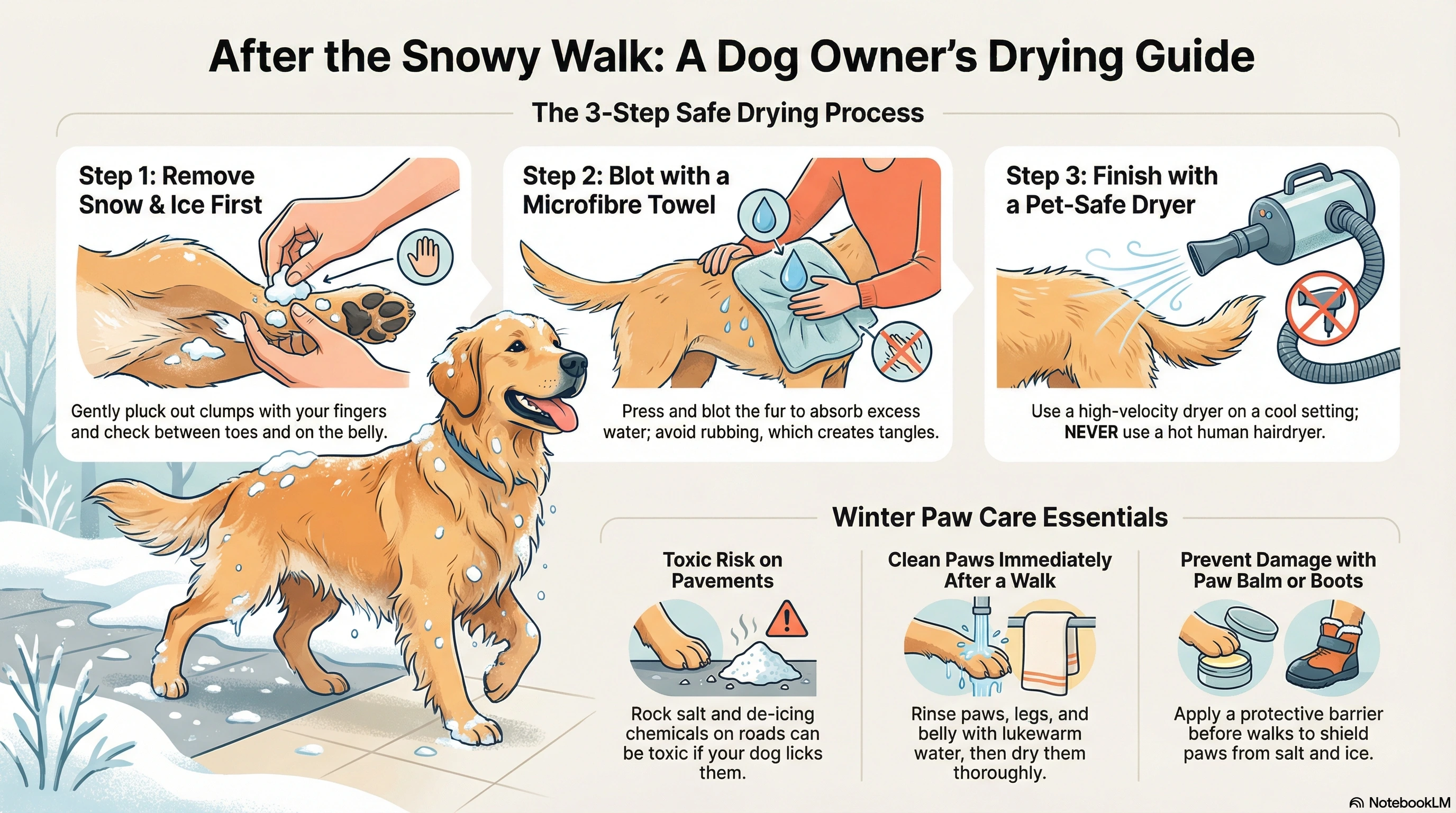
Essential winter drying routine: Remove snow → Towel dry → Complete with pet-safe dryer
Why Winter Grooming Differs from Summer
Winter grooming isn't just regular grooming in colder weather—it requires a completely different approach. The combination of wet fur, freezing temperatures, and UK winter conditions creates unique challenges that don't exist during warmer months.
UK Winter Weather: Wet Snow vs Dry Snow
British winter weather rarely gives us the light, fluffy snow you might see in colder countries. Instead, we get wet, heavy snow that clings to fur and creates problems. This wet snow penetrates deep into the coat, especially on double-coated breeds, making it harder to remove and slower to dry.
Coastal areas like Folkestone, Hythe, and Dover face additional challenges. Sea winds combined with snow and sleet mean dogs get wetter faster, and the salt in coastal air can make fur stickier and more prone to matting.
The Critical Temperature Factor
According to the RSPCA, indoor temperatures should be kept between 10°C and 25°C for dogs.[2] Below 10°C, dogs more susceptible to the cold start to struggle, and at freezing temperatures (0°C), all dogs face hypothermia risk—especially when wet.
The danger isn't just being outside in the cold. What many owners don't realise is that bringing a wet dog into a cold house creates ongoing hypothermia risk. Your dog's wet coat continues to cool their body temperature even after you're indoors, which is why proper drying isn't optional—it's essential.
Breed-Specific Winter Drying Needs
Not all dogs need the same winter drying approach. Size, coat type, and age all affect how quickly a dog loses heat and how long drying takes:
- Double-coated breeds (Huskies, Golden Retrievers, German Shepherds) - Need the longest drying time (30-45 minutes) as their dense undercoat traps moisture. Never shave these breeds in winter as their double coat provides essential insulation.
- Single-coated breeds (Greyhounds, Whippets, Boxers) - Dry faster (10-15 minutes) but lose body heat more quickly. These dogs may need a coat after drying to stay warm.
- Long-haired breeds (Cockapoos, Spaniels, Poodles) - Require careful drying (20-30 minutes) as wet feathering and furnishings mat easily when left damp.
- Small and toy breeds (Chihuahuas, Yorkshire Terriers) - Lose heat fastest despite quick drying time. Priority is speed to prevent hypothermia.
- Puppies and senior dogs - Both struggle to regulate temperature. Need gentle, thorough drying with extra attention to staying warm throughout the process.
For seasonal coat changes and preparation, see our autumn coat transition guide.
Getting Started: Snow Removal and Initial Prep
Before you even think about reaching for the dryer, you need to tackle the snow and ice clinging to your dog's coat. This first step makes all the difference in how effective your drying routine will be.
Dealing with Snow Clumps
If you're lucky enough to have dry, powdery snow, a good brush-through can work wonders. The dry snow will shake right off, taking some of the moisture with it.
But let's be honest - British weather rarely gives us that perfect powder. More often, you're dealing with wet, sticky snow that forms proper clumps in your dog's fur. Here's what works:
- Gentle plucking - Work the snow clumps out with your fingers, being careful not to tug at the fur
- Let your dog shake - A good shake-down can remove up to 20% of the moisture before you start
- Check problem areas - Pay special attention to the belly, between toes, and around the legs where snow loves to stick
The Towel Technique
Once you've cleared the worst of the snow, it's towel time. This isn't about getting your dog completely dry - that's what the proper dryer is for. You're just soaking up the excess water that would otherwise make the drying process take forever.
Microfibre towels are your best friend here. They absorb water far more efficiently than regular towels and won't irritate your dog's skin. Press and blot rather than rubbing - you don't want to create tangles or mats whilst you're trying to help.
Amazon UK Recommendation
For effective snow removal and initial drying, consider a microfibre dog towel set that absorbs water efficiently without creating tangles in wet fur.
Pawdaw of London Recommendation
Upgrade your drying routine with Pawdaw's Luxury Dog Drying Towel - extra-large, super absorbent microfiber designed specifically for thorough post-walk drying.
Don't forget those sneaky spots where moisture hides - under the belly, around the collar area, and especially between the toes. Ice balls love to form there, and they'll melt into cold water that can cause problems later.
Why Complete Drying Isn't Optional
You might think a slightly damp dog isn't a big deal, especially if they seem comfortable. But when it comes to winter weather, "good enough" simply isn't good enough. Here's why thorough drying is absolutely critical.
The Hypothermia Risk
Wet fur loses its insulating abilities almost completely.[3] Your dog's coat works by trapping warm air close to their skin, but when it's wet, that system breaks down. Instead of keeping warmth in, damp fur actually accelerates heat loss.
Small breeds, puppies, and older dogs are particularly vulnerable, but don't assume your robust Labrador is immune.[4] Any dog can develop hypothermia when their wet coat meets cold temperatures, and it can happen faster than you'd expect.
According to the RSPCA, indoor temperatures should be kept between 10°C and 25°C for dogs. Below 10°C, dogs more susceptible to the cold may start to struggle, and at freezing temperatures (0°C), all dogs are at risk of hypothermia and frostbite.[2]
⚠️ Warning Signs of Hypothermia (RSPCA)
Watch for these symptoms after cold weather exposure:
- Shivering (stops in severe cases)
- Drowsiness and confusion
- Loss of coordination
- Pale gums
- Loss of consciousness or collapse
If you notice these signs, warm your dog gradually and contact your vet immediately.[2]
Matting and Coat Damage
Here's something that catches many dog owners off guard - wet snow doesn't just melt and disappear. As it melts into the fur, it can quickly lead to mat formation, especially in longer-coated breeds.
Mats aren't just unsightly - they're genuinely problematic:
- They trap cold water against the skin, making your dog colder
- They pull on the skin, causing discomfort and potential injury
- They block air circulation, reducing the coat's natural insulation
- They're much harder to remove once they've set in properly
Skin Health Concerns
Moisture trapped deep in a thick coat creates the perfect environment for bacteria and yeast to thrive. This is particularly problematic with double-coated breeds where the undercoat can stay damp for hours or even days if not properly dried.
The result? Hot spots, skin infections, and uncomfortable itching that can turn a simple winter walk into a veterinary emergency. Proper drying eliminates this risk entirely by ensuring no moisture remains trapped against the skin. Regular brushing with the right brush for your dog's coat type can help prevent matting. If you're dealing with persistent skin issues, consider consulting with professional groomers in Folkestone who can assess your dog's specific needs.
Choosing the Right Drying Equipment
Here's where many dog owners go wrong - they assume any old hair dryer will do the job. But using the wrong equipment isn't just ineffective, it can actually be dangerous for your dog.
Why Human Hair Dryers Are a No-Go
Never, ever use a human hair dryer on your dog. This isn't just Professional Dog Groomer snobbery - it's a genuine safety issue. Human hair dryers rely on high heat to dry hair quickly, but dogs have much thinner, more sensitive skin than we do. What feels warm to you can cause burns, irritation, or overheating in your dog.
Dog dryers work differently. They rely primarily on velocity - the force of the air - rather than heat to blow water out of the coat. This makes them both safer and more effective for our four-legged friends.
High-Velocity Dryers: The Professional Choice
If you've got a thick-coated or double-coated breed, a high-velocity dryer is worth its weight in gold. These powerful machines can deliver blow forces of over 1000 grams and wind speeds up to 164 feet per second.
What makes them so effective? The force of the air penetrates right down to the undercoat, straightening the fur and literally blowing the water out. As a bonus, they also act as a deshedding tool, removing loose, dead hair that would otherwise end up on your furniture.
Amazon UK Recommendation
For thick-coated breeds, consider a high-velocity dog dryer that uses air force rather than heat to safely and effectively dry double coats after snow exposure.
For breeds like Golden Retrievers, Huskies, or German Shepherds, a high-velocity dryer can cut drying time in half whilst doing a more thorough job than any other method. If you have a double-coated breed, proper drying is especially critical as their dense undercoat can trap moisture for hours.
Alternative Options
Not everyone needs (or can afford) a professional-grade high-velocity dryer. Here are some other options that many professional Dog Grooming Services also use:
- Stand dryers - Quieter than forced-air dryers and allow you to brush whilst drying, preventing tangles
- Handheld pet dryers - Designed specifically for dogs with safety features and appropriate temperature ranges
- Cage dryers - Hands-free option, though not suitable for all dogs and require careful monitoring
Safe Drying Practices
Regardless of which type of dryer you use, safety should always come first:
- Use the lowest heat setting that's effective - many professional dryers offer temperature ranges from 85°F to 140°F
- Keep the dryer moving - never concentrate airflow on one spot for too long
- Maintain proper distance - hold the nozzle at least 6 inches from your dog's skin
- Watch for overheating signs - panting, drooling, or restlessness mean it's time for a break
- Protect your hearing - high-velocity dryers can be loud, so consider ear protection for yourself
Post-Walk Paw and Leg Care
Winter walks bring their own set of challenges beyond just snow and ice. The chemicals used to keep our roads and pavements safe can be genuinely harmful to your dog's paws and health.
The Hidden Dangers of De-icing Products
During winter walks, your dog's paws, legs, and belly pick up more than just snow.[2] Rock salt, de-icing chemicals, and even antifreeze residue can cling to their fur and pads.
These substances aren't just irritating - they can be toxic. According to the RSPCA, rock salt (a mixture of salt and grit used to de-ice roads) can cause thirst, vomiting, lethargy, and in severe cases convulsions and kidney damage if ingested. Antifreeze containing Ethylene glycol is even more dangerous - it can cause kidney failure and death.[2] Always clean salt and chemicals off your dog's paws before they get a chance to lick them.
The Cleaning Routine
As soon as you get back from a winter walk, make paw cleaning part of your routine:
- Rinse with lukewarm water - Focus on the paws, legs, and belly area where chemicals accumulate
- Clean between the toes - This is where ice balls and salt crystals love to hide
- Dry thoroughly - Use a towel first, then a dryer if needed to prevent chapping and cracking
- Check for damage - Look for cuts, cracks, or signs of irritation on the paw pads
Don't rush this process. Trapped moisture between the toes can lead to bacterial infections, whilst leftover chemicals can cause ongoing irritation.
Dog Drying Robe - UK Made Solution
Product:Dogrobes Dog Drying Coat (Made in Britain)
Type: Post-walk absorbent drying robe
Price: From £32.50 (UK company)
Why it works: UK-designed specifically for British wet winter weather. Super-absorbent microfibre inner layer wicks moisture away from the coat while your dog continues to dry indoors. Prevents post-walk chilling while you finish the full drying process. Machine washable and quick-drying between uses.
Perfect for: Bridge solution between outdoor walk and full drying session. Keeps dogs warm while you prep equipment. Essential for multi-dog households where you need to dry dogs in sequence.
→ Visit Dogrobes UK
Warren London Recommendation
Make paw cleaning easier with Warren London's Paw Sani Scrub - includes a scrub brush and anti-oxidant formula perfect for removing winter debris and chemicals.
Amazon UK Recommendation
For winter paw care, consider a paw cleaning kit with protective balm and gentle cleansing wipes designed for removing salt and de-icing chemicals.
Prevention Tips
A bit of preparation can save you a lot of trouble:
- Trim paw hair regularly - Less hair means fewer places for ice and chemicals to stick
- Apply paw balm before walks - Creates a protective barrier against salt and chemicals
- Consider dog boots - For particularly sensitive dogs or harsh conditions
- Choose your routes carefully - Avoid heavily salted areas when possible
The key is prevention. Before heading out, apply a thin layer of paw balm or petroleum jelly to your dog's paw pads. This creates a barrier that prevents ice and snow from sticking and makes cleanup much easier when you return.
Warren London Recommendation
Protect your dog's paws from harsh winter conditions with Warren London's Hydrating Butter Balm - specially formulated for nose and paw protection with deep-penetrating moisture relief.
For dogs that spend a lot of time outdoors in winter, consider investing in quality dog boots. Yes, your dog might look a bit silly at first, but their paws will thank you. Look for boots with good traction, waterproof materials, and secure but comfortable fastenings.
Amazon UK Recommendation
Keep paws protected with waterproof winter dog boots featuring anti-slip soles and reflective straps for safe winter walks on snow and ice.
After cleaning and drying, a light application of paw balm or moisturiser helps prevent cracking and provides ongoing protection for the next walk. For a complete guide to protecting your dog's feet during the colder months, see our winter paw care guide.
Local Context & When to Seek Professional Help
Along the Folkestone, Hythe, Sandgate, and Dover stretches, winter conditions can be particularly challenging. Coastal winds combined with snow and ice create unique grooming challenges that require proper preparation and aftercare.
For daily prevention tips during wet weather, see our guide on post-rain grooming. If you're dealing with matting issues between professional appointments, our matting prevention guide offers practical daily routines.
If your dog has a particularly challenging coat, or if you're struggling with winter grooming routines, don't hesitate to book a professional dog groomer for guidance. We can help establish a winter routine that works for both you and your dog, and show you the proper techniques for home care.
Keeping Your Dog Safe, Warm, and Dry
Winter grooming isn't just about keeping your dog looking good - it's about keeping them healthy and comfortable when the weather turns harsh. The difference between a quick towel-off and proper drying can literally be the difference between a happy, healthy dog and one at risk of hypothermia or skin problems.
Your Winter Grooming Checklist
Before the next snowy walk, make sure you've got these essentials sorted:
- ✓ Quality microfibre towels for initial moisture removal
- ✓ Proper pet dryer (not your hair dryer!) with adjustable settings
- ✓ Paw balm for protection and aftercare
- ✓ Lukewarm water ready for paw cleaning
- ✓ Patience - rushing the drying process defeats the purpose
Pawdaw of London Recommendation
Complete your winter grooming kit with Pawdaw's Luxury Set of 4 Dog Paw Towels - smaller, portable microfiber towels perfect for quick paw cleaning during winter walks.
Remember, every dog is different. What works for a thick-coated Golden Retriever might be overkill for a short-haired Whippet. Pay attention to your dog's individual needs and adjust your routine accordingly.
Finish with a light conditioning spray if needed. Keep the routine simple: Remove snow, Towel dry, Complete with proper dryer - no harsh heat, no shortcuts - so your dog stays comfortable, clean, and healthy through winter weather.
Frequently Asked Questions
Should dogs be groomed in winter?
Yes, dogs absolutely need grooming in winter—it's actually more important than summer grooming. Winter grooming serves different purposes: preventing matting from wet weather, removing debris like salt and ice, maintaining coat insulation, and most critically, proper drying after walks to prevent hypothermia. According to Medivet, dogs don't groom themselves like cats, so they need extra help to keep their thicker winter coat in check and prevent matting.[1]
The misconception that dogs don't need grooming in cold weather is dangerous. While you shouldn't shave double-coated breeds in winter, regular brushing (2-3 times weekly for most breeds, daily for long-coated dogs) and thorough drying after every snowy or wet walk are essential winter grooming tasks.
How often should I groom my dog in winter?
Winter grooming frequency depends on coat type and how often your dog gets wet: Double-coated breeds need brushing 2-3 times per week to maintain their insulating undercoat. Long-haired breeds like Spaniels and Poodles need daily brushing to prevent matting from wet weather. Short-coated breeds can manage with weekly brushing. However, every dog needs immediate post-walk drying whenever they've been in snow, ice, or rain—this isn't optional and should happen after every wet walk to prevent hypothermia and skin issues.
Can I use a human hair dryer on my dog after winter walks?
No, human hair dryers are not safe for dogs after winter exposure. They blow too hot and can cause burns on cold, wet skin. More dangerously, the temperature shock from hot air on a cold dog can worsen hypothermia risk rather than help. Human dryers also rely on heat rather than air velocity, making them ineffective at drying thick or double coats.
Use high-velocity pet dryers on cool or room-temperature settings, or towel dry thoroughly if you don't have specialized equipment. The goal is gentle, complete drying—not rapid heating. For proper equipment guidance, see our section on choosing the right drying equipment.
What temperature should I dry my dog at after snow exposure?
Use room temperature (20-25°C) air when drying your dog after snow walks. Many professional pet dryers offer temperature ranges from 29°C (85°F) to 60°C (140°F)—start at the lowest setting and only increase if your dog tolerates it well and the dryer isn't near their skin. The RSPCA recommends keeping indoor temperatures between 10°C and 25°C for dogs, with anything below 10°C putting cold-susceptible dogs at risk.[2] Never use hot air on a cold, wet dog as this can cause skin burns and temperature shock.
How long should I spend drying my dog after snow exposure?
Plan for 15-30 minutes depending on your dog's coat type and size. Double-coated breeds like Golden Retrievers need longer (20-30 minutes minimum) as their dense undercoat traps moisture deep in the coat. Short-haired breeds like Whippets need less time (10-15 minutes) but shouldn't be rushed. Small breeds and puppies may dry quickly but need gentle handling to prevent chilling during the process.
The key is ensuring complete dryness, not speed. A damp dog left to air dry in a cool house risks ongoing hypothermia. Check deep into the coat, especially at the chest, belly, and base of the tail where moisture hides.
How do I know if my dog has hypothermia after winter walks?
Watch for these hypothermia warning signs from the RSPCA:[2]
- Shivering (stops in severe cases as the body gives up trying to warm itself)
- Drowsiness and confusion
- Loss of coordination or stumbling
- Pale or blue-tinged gums
- Slow, shallow breathing
- Weak pulse
- Loss of consciousness or collapse
If you notice any of these signs, warm your dog gradually with dry towels and blankets, move them to a warm room, and contact your vet immediately. Never use direct heat sources like radiators or hot water bottles as this can cause shock. Prevention through proper drying is always better than treatment.
How do I safely remove ice balls from my dog's paws?
Use lukewarm (not hot) water to gently melt ice balls between toes and paw pads. Never pull or force them off as this can damage the delicate skin and cause pain. Fill a shallow bowl with lukewarm water and gently hold each paw in it for 30-60 seconds until the ice melts.
Dry thoroughly afterwards and check for cuts, cracks, or irritation from de-icing salt—the RSPCA warns that rock salt can cause chemical burns and is toxic if ingested.[2] Apply protective paw balm before future walks to create a barrier that prevents ice and snow from sticking. See our winter paw care section for more detailed guidance.
Should I groom my dog differently in winter weather?
Yes, winter grooming requires significant adjustments from your summer routine. Keep coats slightly longer for insulation—Medivet confirms that despite centrally heated homes, dogs still need proper coat length for outdoor protection.[1] Focus on thorough drying after each walk, increase paw care frequency to check for salt burns and ice damage, and brush more regularly to prevent wet-weather matting.
Avoid over-bathing in winter as this strips natural oils that provide water resistance and insulation. Professional groomers in Kent can advise on breed-specific winter coat maintenance—find experienced groomers in the Folkestone area who understand local winter weather challenges.
Is it safe to walk my dog in snow and ice?
Yes, but with precautions. The Kennel Club advises keeping dogs on lead during snowy walks as a thick blanket of snow can hide dangerous areas like deep drifts and frozen water bodies.[3] Dogs can easily fall through thin ice on frozen ponds, creating a life-threatening emergency.
Check weather conditions before heading out, avoid heavily salted routes when possible, apply paw balm as a protective barrier, and most importantly, commit to thorough drying immediately after the walk. For ongoing wet weather care, see our post-rain grooming guide.
What's the biggest mistake people make with winter dog grooming?
Assuming a damp dog will air dry safely indoors. This is the most common and dangerous winter grooming mistake. Wet fur loses its insulating properties almost completely, and a damp dog in a cool house continues to lose body heat even after coming inside. What seems like "just a bit damp" can lead to hypothermia, skin infections, and painful matting. Every wet or snowy walk needs active, complete drying—not just a quick towel-off. Make proper drying non-negotiable, regardless of how tired you are or how late it is.
Professional Winter Grooming Services in Kent
If you're struggling with winter grooming routines or want professional advice for your dog's specific needs, consider booking with experienced groomers in the Folkestone area. Professional services can provide:
- Breed-specific winter coat preparation
- Professional-grade drying equipment
- Paw protection treatments
- Skin and coat health assessments
Find qualified dog groomers near you through our local groomer directory.
References
This guide is based on verified sources from UK veterinary organizations, animal charities, and pet care professionals: